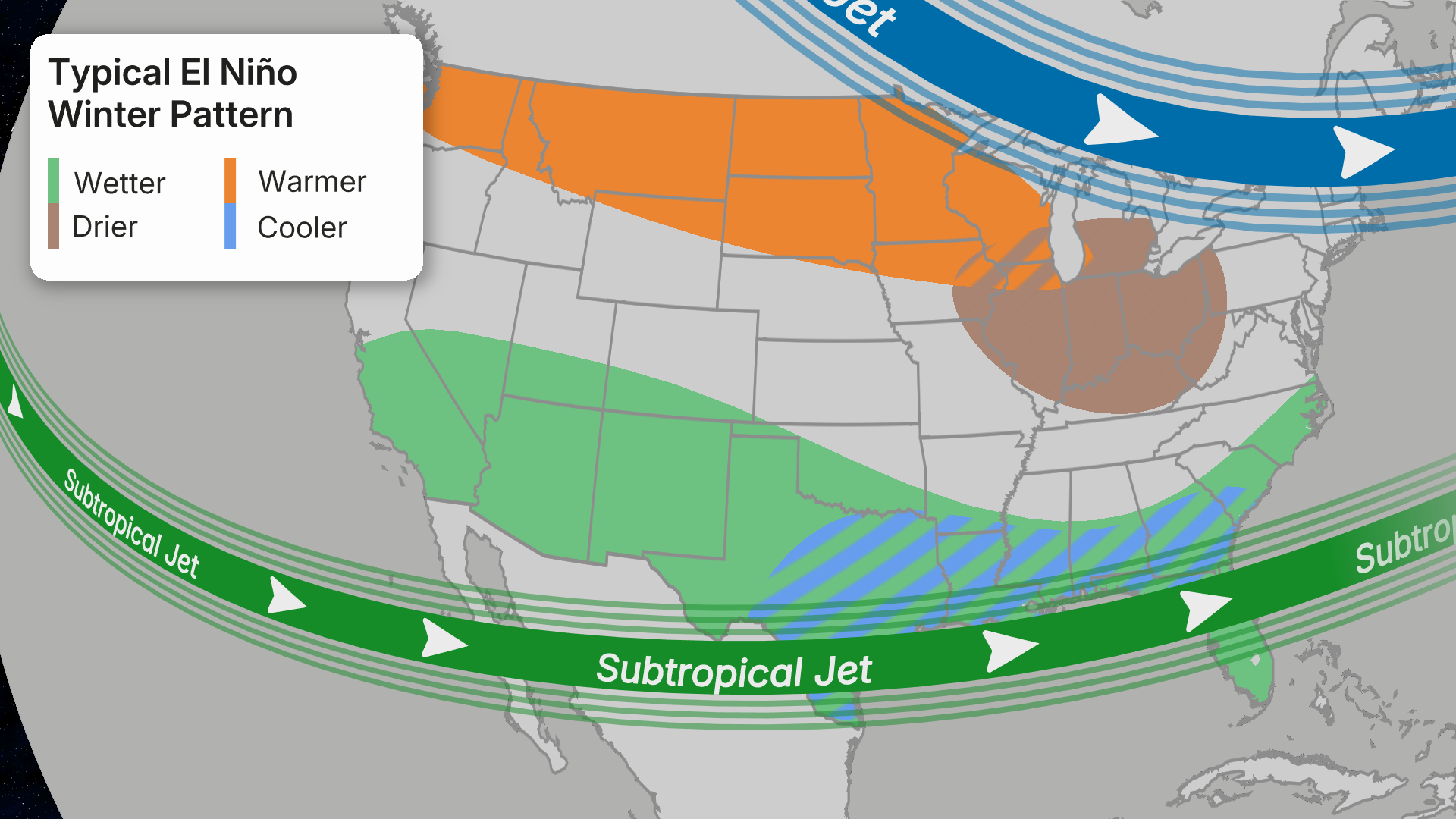
El Niño, the oceanic phenomenon that has shaped global weather for decades, is now at the forefront of climate discussions as scientists warn of a potential record-breaking event. This seasonal pattern, once a predictable cycle, is showing signs of unprecedented intensity, raising alarms about its impact on ecosystems and human societies worldwide.
The term 'El Niño' translates to 'the child' in Spanish, but it refers to a complex climate system involving warm ocean currents in the Pacific. As the Pacific Ocean's surface temperatures rise, atmospheric conditions shift, triggering widespread weather disruptions across continents. The current phase, known as the 'El Niño-Southern Oscillation' (ENSO), is being monitored with unprecedented precision by global meteorological networks.
Is This the Strongest El Niño in History?
Recent data from the National Oceanic and Atmospheric Administration (NOAA) indicates that the current El Niño has already reached levels comparable to the 1997-1998 event, the strongest on record. But scientists caution that this isn't just about temperature—
- It could trigger a 20-30% increase in extreme weather events globally
- It may cause unprecedented flooding in Southeast Asia and South America
- It could push global temperatures above 1.5°C this summer
These projections are based on the latest models, which are now showing 'off the charts' levels of confidence in their predictions. The discrepancy between historical patterns and current data is critical for understanding the urgency of this phenomenon.
The 1997-1998 El Niño event caused significant economic losses and ecological disruption, particularly in regions dependent on regular seasonal patterns. Today's models suggest a similar trajectory, but with a twist: the current El Niño is occurring against a backdrop of rapid climate change, making its effects more unpredictable.
For example, in the Pacific Northwest, the combination of warmer ocean waters and shifting wind patterns has already led to unusual precipitation events. In South America, the Amazon basin has seen a 40% increase in rainfall, threatening delicate ecosystems.
Why Is This El Niño Different?
Unlike previous events, this El Niño is being observed through multiple independent systems: satellite data, ocean buoys, and atmospheric models. This multi-source validation is a key indicator of its severity.
Scientists note that the current El Niño is also interacting with other climate systems, such as the Indian Ocean Dipole, creating a more complex pattern of weather changes. The 2025 projections, while still evolving, suggest a potential 'super El Niño' scenario that could last six months or more.
The implications are far-reaching. As the ocean absorbs more heat from the atmosphere, the frequency and intensity of El Niño events may increase, creating a feedback loop that could accelerate global warming.
Experts like Dr. Elena Rodriguez, a leading climate scientist at NOAA, emphasize that while the current El Niño is not a new phenomenon, its scale and duration are unprecedented given today's climate conditions.
With the Pacific Ocean's surface temperatures now 0.4°C above pre-industrial levels, the risk of a record-breaking event is not just theoretical—it's imminent.