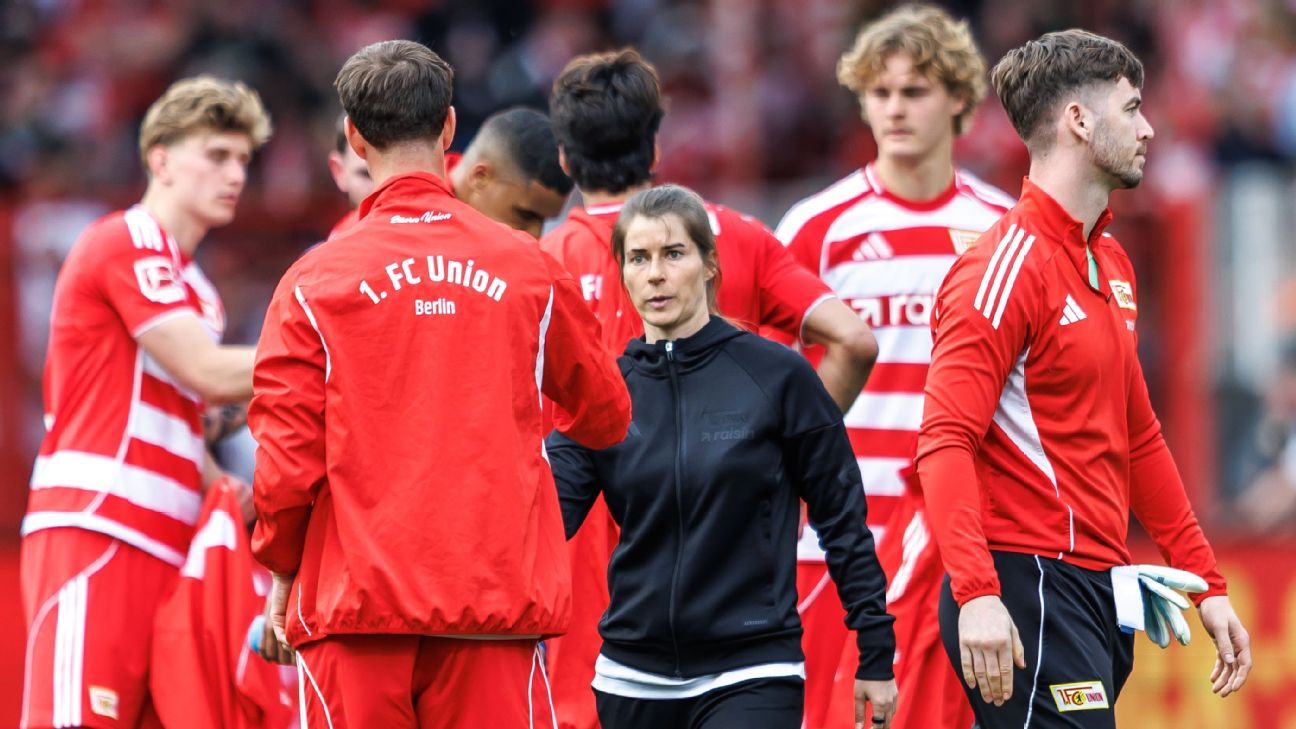
Marie-Louise Eta has made history as the first woman to lead a men’s team in one of Europe’s top five leagues. Her appointment as head coach of Union Berlin’s men’s squad marks a pivotal moment in football’s evolving landscape. This milestone, achieved just days after her initial match with the club, underscores a growing push for gender equity in sports leadership. The move has sparked both celebration and controversy, with immediate challenges emerging as the football world watches closely.
Etta’s journey to this moment is rooted in her extensive experience in women’s football. As the first woman to hold a men’s coaching license in Germany, she previously led Union Berlin’s women’s team for two seasons before stepping into the men’s squad. Her previous role earned her recognition as a trailblazer in female-led football development. However, Union Berlin’s decision to temporarily appoint her to the men’s team has raised questions about the integration of women’s and men’s football structures.
At the heart of this controversy lies a fundamental tension between innovation and tradition. While Eta’s appointment represents progress, critics argue that it risks undermining the distinct needs of women’s football. The club’s president, Ralf Hirschberger, has stated that Eta’s role is temporary and focused on preparing for the next season, emphasizing her commitment to women’s football. This stance highlights the complexities of bridging gendered structures within a single organization.
Is Eta’s temporary role a step forward or a setback?
Supporters of Eta’s appointment argue that her experience with women’s football provides unique insights into player development and tactical strategies. They highlight her role in the success of Union Berlin’s women’s team, which has seen significant growth in recent years. Conversely, opponents argue that a permanent role would dilute the focus on women’s football, which has historically been underfunded and undervalued.
- Union Berlin’s women’s team has achieved a league title in the past two seasons, showcasing the potential for success in women’s football.
- Men’s and women’s teams often operate with different training and competitive structures, which can lead to misalignment in coaching approaches.
- The ‘diservice to women’s football’ criticism is rooted in fears that a permanent role could divert resources and attention from women’s development.
As the debate intensifies, the club has emphasized that Eta’s role is not permanent and is designed to bridge the gap between the men’s and women’s teams. This temporary structure aims to foster collaboration and ensure that the women’s program remains prioritized.
Looking ahead, the implications of Eta’s appointment extend beyond Union Berlin. Her success could influence how clubs approach gender equality in leadership roles. If Eta’s men’s team delivers results, it could pave the way for more women in top-tier men’s coaching. However, the challenge remains to ensure that women’s football is not sidelined in the process.
With the global push for gender equality gaining momentum, Eta’s story serves as a critical case study. The football world is watching to see if this bold step can be sustained without harming the progress made in women’s football. As Eta prepares for her first match, the world awaits to see how she navigates this historic transition.