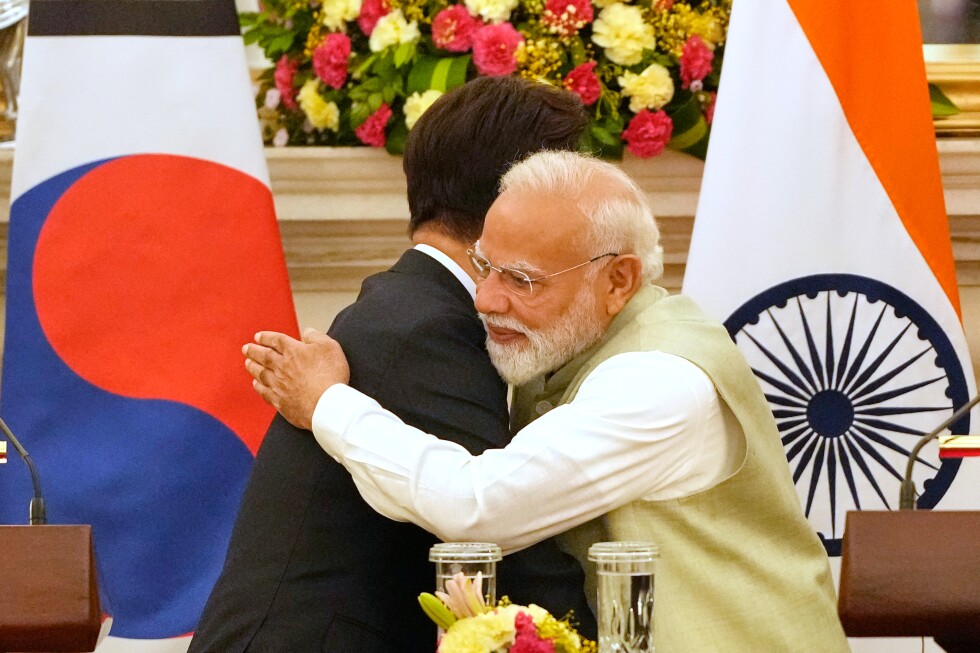
India and South Korea have launched an ambitious economic partnership aimed at doubling bilateral trade to $50 billion by 2030, marking a significant shift in their strategic relationship. This initiative, formalized through a landmark memorandum of understanding (MoU) signed in New Delhi in April 2026, highlights the growing economic interdependence between the two nations. The agreement, hailed by both governments as a 'strategic economic corridor,' underscores the potential for transformative collaboration in high-value sectors such as technology, manufacturing, and renewable energy.
The deal, signed by Prime Minister Narendra Modi and South Korean President Lee Jae Myung during a high-level meeting, addresses critical gaps in existing trade frameworks. By targeting $50 billion in annual trade—nearly double the current figure—the partnership seeks to strengthen supply chains, reduce trade barriers, and foster innovation in emerging industries. This move aligns with India’s push for 'Make in India' and South Korea’s 'Sustainable Growth Strategy,' emphasizing technology transfer and sustainable development as key pillars of their joint vision.
Can this trade deal truly unlock the potential of emerging economies?
For India, which has been actively pursuing economic diversification beyond its traditional markets, the $50 billion target represents a strategic opportunity to access South Korea’s advanced manufacturing capabilities and technological expertise. South Korea, with its world-leading shipbuilding and semiconductor industries, is poised to become a key partner in India’s industrial modernization efforts. The agreement also signals a broader shift in South Asia’s economic landscape, as both countries aim to strengthen their positions in global value chains amid rising geopolitical tensions and supply chain disruptions.
- Shipbuilding cooperation: South Korea’s expertise in constructing next-generation vessels, including green shipping solutions, will be critical for India’s maritime security and coastal infrastructure projects.
- Technology transfer: Joint ventures in artificial intelligence, 5G, and renewable energy are expected to drive innovation while addressing India’s energy security concerns.
- Supply chain resilience: By diversifying trade routes and reducing reliance on traditional hubs, the partnership aims to create a more robust and flexible global supply chain network.
The initiative also addresses the pressing need for sustainable development, particularly in the context of climate change and resource scarcity. With India’s growing focus on renewable energy and South Korea’s advanced green technologies, the collaboration promises to accelerate the adoption of clean energy solutions across both nations. This alignment with global sustainability goals positions the two countries as pioneers in climate-resilient economic integration.
Challenges remain, including navigating complex regulatory frameworks and overcoming cultural and linguistic barriers. However, both governments have emphasized the importance of mutual trust and long-term commitment to ensure the success of the initiative. The partnership is expected to create jobs, boost GDP, and foster deeper economic integration, particularly in sectors where innovation and sustainability are paramount.