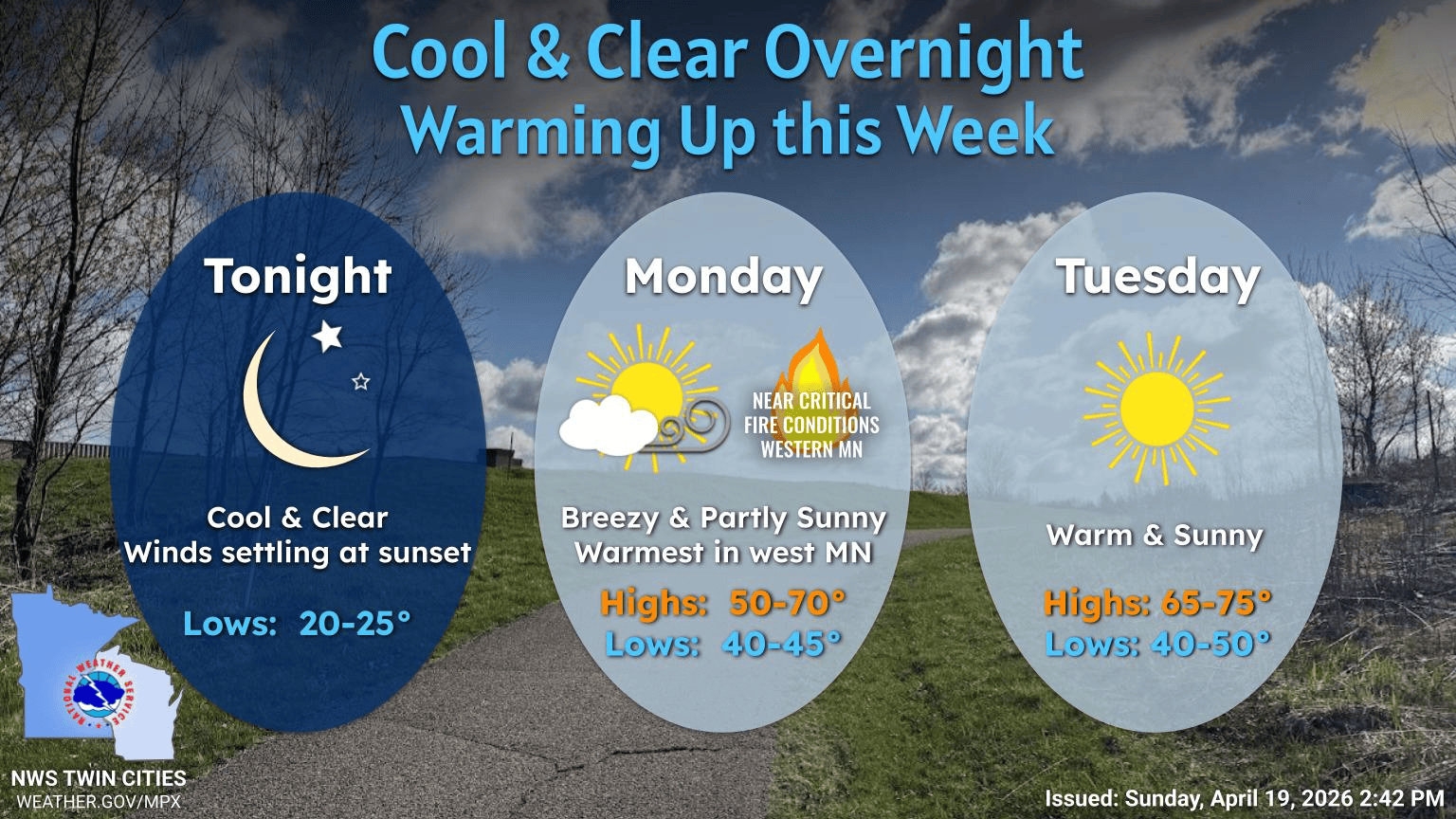
Minnesota's wildfire risk has surged to critical levels as a red flag warning has been issued for 66 counties across the state, signaling an imminent threat of rapid fire spread. This alert, issued by the National Weather Service, marks a pivotal moment in the state's ongoing battle against increasingly unpredictable fire conditions. As temperatures rise and winds pick up, the combination of these factors creates a perfect storm for wildfire ignition and propagation.
Why Red Flag Warnings Matter Now?
Red flag warnings are not just meteorological alerts—they are critical fire management signals. These warnings indicate conditions that significantly increase the risk of wildfire, such as high temperatures, low humidity, strong winds, and abundant dry vegetation. In Minnesota, where forested landscapes meet agricultural land, these conditions can quickly turn into catastrophic fire events. The state's Department of Natural Resources (DNR) has expanded burn restrictions to address this growing concern, reflecting the urgency of the situation.
The recent shift from cool, clear overnight conditions to warm, windy weather has accelerated fire risk. According to the National Weather Service, this transition has led to a sharp increase in fire potential across the state. Minnesota's unique geography—spanning dense forests, open fields, and urbanized areas—makes it particularly vulnerable to rapid fire spread once ignited.
What Triggers a Red Flag Warning?
A red flag warning is triggered when specific conditions align to create a high fire risk. These include: high temperatures (above 70°F), low humidity (below 25%), and strong winds (over 10 mph). When these elements combine, they create a 'fire weather' scenario that is particularly dangerous for both natural landscapes and human infrastructure.
- High temperatures dry out vegetation, making it highly flammable
- Low humidity reduces moisture in plant material, increasing ignition risk
- Strong winds rapidly transport embers and firebrands over long distances
Minnesota's recent weather pattern—starting with a chilly start followed by a warm, windy week—has created a perfect environment for wildfires. The DNR has expanded burn restrictions to prevent human-caused fires, emphasizing the severity of the situation.
Historically, Minnesota has faced significant wildfire challenges, with the state experiencing an average of 150–200 wildfires annually. This year, however, the combination of prolonged drought, early snowmelt, and record-high temperatures has pushed the state into uncharted territory. Experts warn that without immediate action, these conditions could lead to large-scale fire events affecting rural communities and natural habitats.
Residents are urged to take proactive steps to reduce fire risks. This includes avoiding open burning, ensuring fire-safe practices around campfires, and having emergency plans in place. The DNR's expanded burn restrictions are part of a broader strategy to mitigate the growing threat of wildfires in the state.