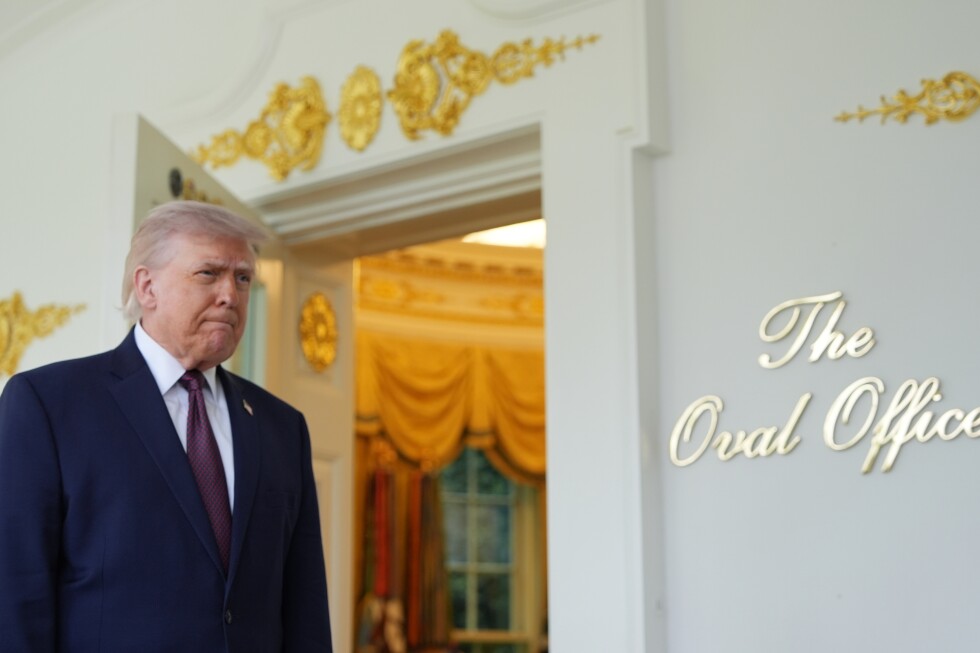
President Donald Trump's recent obsession with the White House ballroom has sparked intense analysis among political observers, with the Washington Post identifying a troubling trend. This fixation isn't just a whimsical preference—it's a strategic shift in how Trump approaches power and legacy.
As reported by the Washington Post, Trump's increasing focus on the White House ballroom reflects a broader pattern of his desire to craft an enduring, opulent image of the presidency. Unlike traditional presidential settings, this space becomes a stage for personal expression, where grandeur and historical nostalgia collide with modern political imperatives.
Why the Ballroom?
Analysts point to Trump's repeated references to the 'White House ballroom' as a deliberate move to reframe his presidency through a lens of elegance and historical continuity. By aligning himself with the Marie Antoinette archetype—a symbol of royal excess and regal opulence—Trump seeks to evoke a sense of timeless, unshakeable authority.
- Historical resonance: The White House ballroom, once a private space for formal events, now symbolizes a return to pre-20th century presidential traditions.
- Political signaling: The ballroom represents a deliberate shift away from the 'hard' aspects of governance toward a more theatrical, visually curated narrative.
- Legacy construction: Trump aims to create a legacy that transcends policy debates, focusing instead on the aesthetics of power and exclusivity.
According to the Washington Post analysis, this trend has intensified since Trump's return to the presidency, with specific instances like his rendering of the proposed new East Wing during a March 29 flight to Joint Base Andrews highlighting his fixation on physical spaces that embody his vision of 'grandeur'.
The Marie Antoinette comparison is particularly significant. Historically, she became a symbol of royal decadence and rebellion against the monarchy, but Trump's use of her name suggests a different narrative—one where power is not just held but *lived* through luxury and spectacle.
What Does This Mean for Future Governance?
As Trump continues to emphasize the White House ballroom, critics argue this signals a growing disconnect between his leadership style and the practical demands of modern governance. The ballroom, once a place of formal state dinners and diplomatic events, is now being reimagined as a personal sanctuary for his own brand of power.
While the Washington Post notes the ballroom's role in Trump's 'gilded' narrative, it also warns of potential risks: a lack of focus on policy, an overemphasis on visual symbolism, and a possible erosion of the White House's traditional role as a center for national decision-making.
For now, the ballroom remains a tool for Trump to assert control over his public image, but its long-term impact on governance is still unfolding. The key question is whether this fixation will become a permanent feature of presidential leadership—or a temporary phase in a larger, more complex political strategy.