

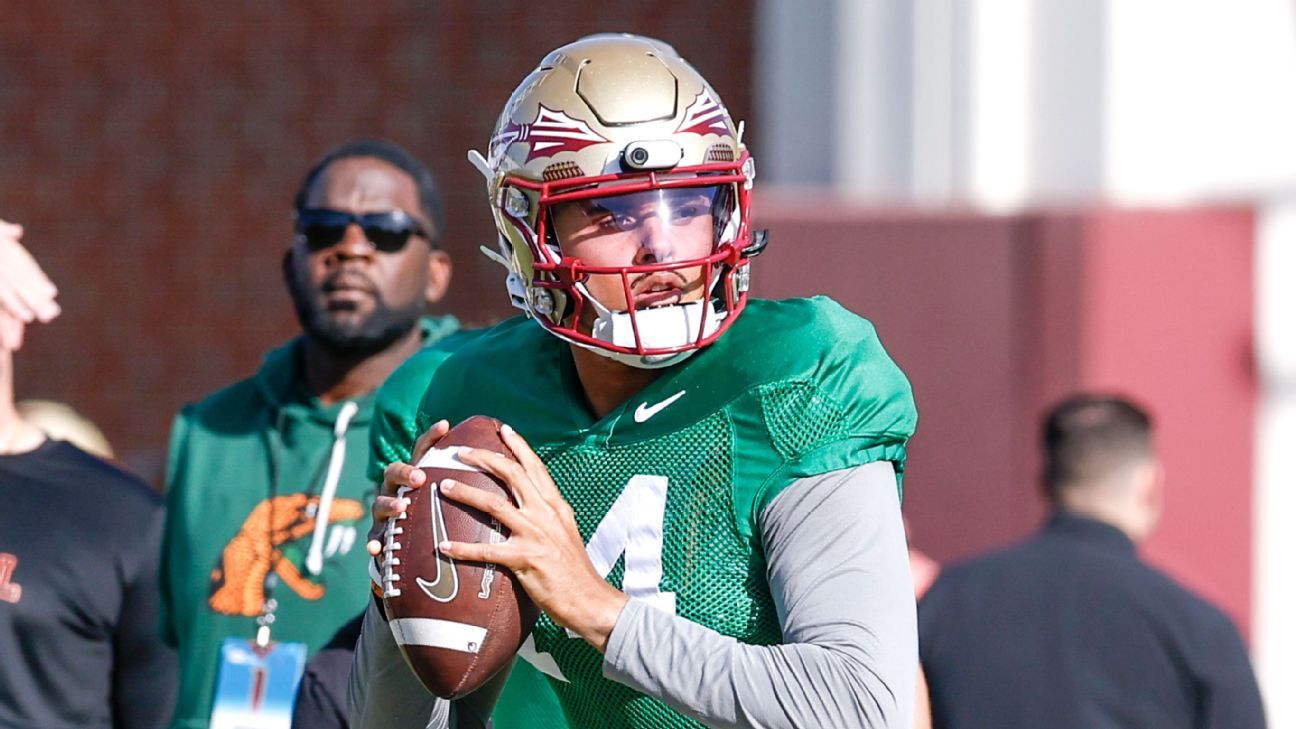
Ashton Daniels’ journey from Auburn to Florida State marks a pivotal shift in college football dynamics, blending strategic talent with programmatic evolution. The announcement of his selection as Florida State’s starting quarterback for the 2026 season has sparked intense analysis across the sports landscape. This transition isn’t just a personnel change—it’s a reflection of modern college football’s shifting priorities, where adaptability and elite athleticism intersect with institutional strategy.
How Did Ashton Daniels Secure the Starting Role?
According to reports from ESPN’s Andrea Adelson, Daniels’ seamless transition from Auburn to Florida State has been a masterclass in timing and preparation. His performance during spring camp, where he outperformed rivals like Kevin Sperry, highlights the growing emphasis on on-field readiness and tactical acumen in today’s competitive landscape.
What makes this move significant is that Daniels is not just a player but a symbol of the evolving quarterback role in the modern era. His ability to thrive in high-stakes environments—whether at Auburn or now at FSU—demonstrates a unique blend of physicality and mental resilience that aligns with the current demands of college football.
Why Does This Matter for College Football?
- It underscores the growing importance of transfer players in shaping program success
- Highlights the strategic value of early spring camp performance
- Reflects the increasing focus on mental toughness and adaptability in high-pressure roles
For fans and analysts, this transition provides a microcosm of broader trends: the rise of transfer athletes, the intensification of spring camp competitions, and the growing recognition of mental resilience as a critical component of athletic excellence.
While this shift may seem like a simple personnel change, it has significant implications for the future of college football. As programs increasingly prioritize athletes who can adapt to new systems and environments, Daniels’ story illustrates the critical intersection of individual talent and institutional strategy.