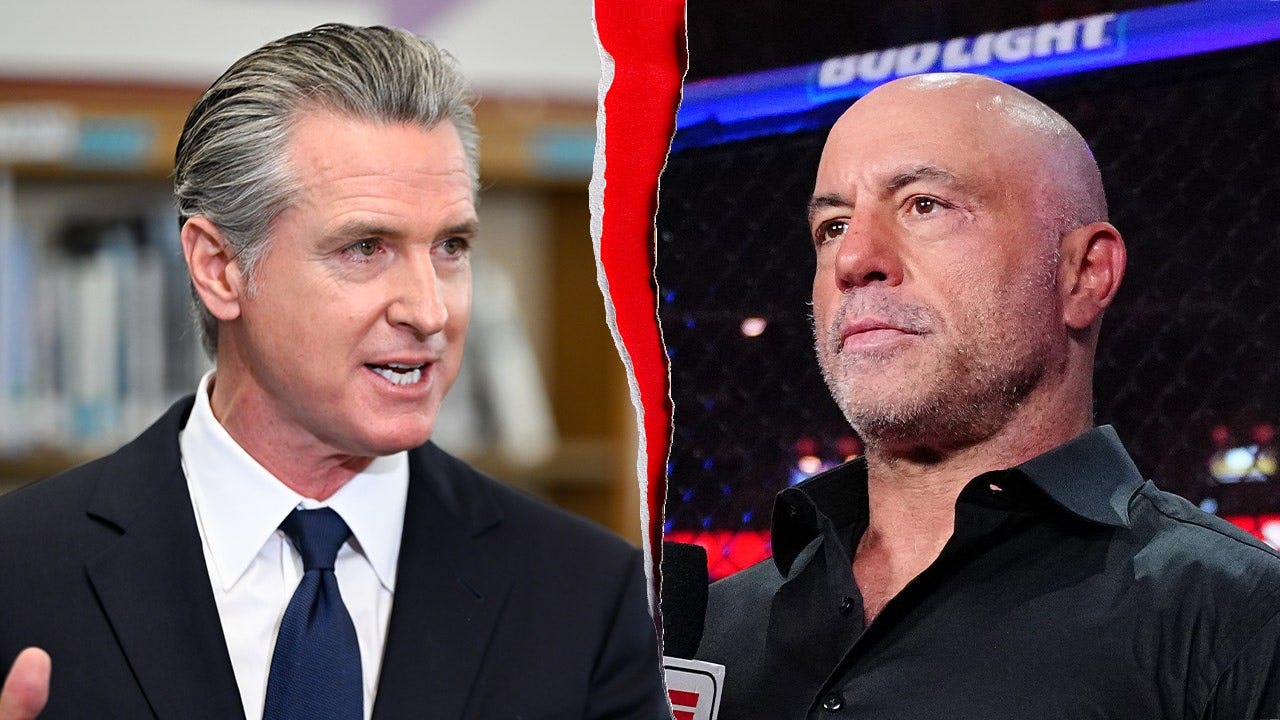
California Governor Gavin Newsom has ignited a firestorm in internet culture with his direct confrontation of Joe Rogan, the controversial podcast host, following a viral clip where Rogan referred to Newsom as a 'f--ing con man.' The exchange, captured in a short video shared by Newsom's team, has sparked widespread discussion about modern governance, digital communication, and the evolving dynamics of public engagement in the age of social media.
Newsom's reaction, which he initially posted on X under the banner of his 'Governor Newsom Press Office,' mirrors the confrontational tone often associated with former President Donald Trump's communication style. This strategic move has drawn comparisons to a high-profile political rivalry, highlighting how contemporary leaders are adapting their messaging to resonate with online audiences. The incident underscores a critical shift in how political figures interact with their constituents through digital platforms, where tone and timing are as important as content.
Why Did Newsom Target Rogan?
The governor's choice to publicly challenge Rogan—calling him 'too chicken' for a podcast invitation—has been widely interpreted as a response to Rogan's derogatory remarks about Newsom's leadership. The clip in question, which shows Rogan using the phrase 'f--ing con man' to describe Newsom, has been viewed by many as a dismissive and disrespectful comment about the governor's identity and role as a public servant.
By publicly addressing this issue through a direct and unfiltered response, Newsom has demonstrated a commitment to transparency and accountability in his communication. This is particularly significant given his history of prioritizing progressive policies and innovative governance strategies, such as the state's ambitious climate action initiatives and efforts to streamline public services through digital platforms.
- The incident highlights the growing influence of social media in shaping political discourse
- It reflects a broader trend of leaders using digital platforms to directly engage with critics and supporters
- It underscores the challenges of maintaining a professional image in a polarized digital landscape
While Newsom's response has been met with mixed reactions, it has also provided a platform for deeper analysis of the evolving relationship between political leaders and digital influencers. The governor's decision to address the issue head-on, rather than retreating from the confrontation, demonstrates a level of confidence and assertiveness that has been critical to his leadership style.
As the controversy continues to spread across social media, it is clear that Newsom's approach to handling criticism and public criticism is increasingly shaped by the need to maintain a strong, consistent message while engaging with a diverse and often polarized online audience.