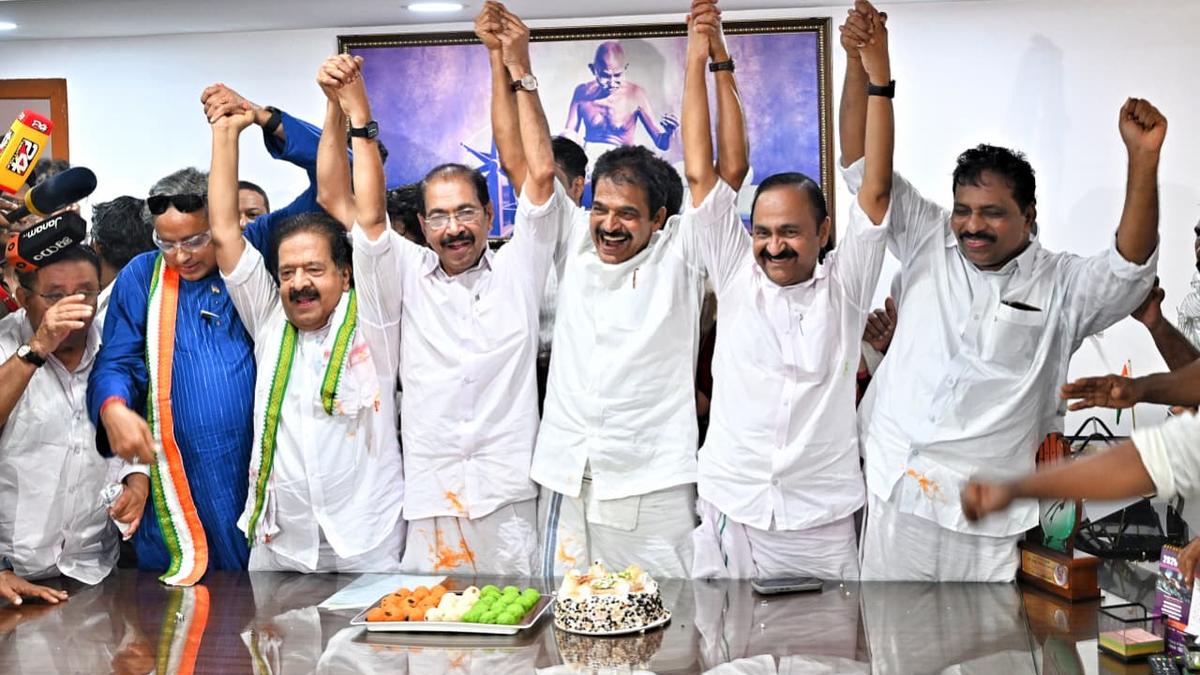
In the unfolding drama of Kerala's 2026 state elections, early results are painting a striking picture of political realignment. The Congress-led United Democratic Front (UDF) has already secured a commanding lead in the state assembly, with 45 seats confirmed, while the Left Democratic Front (LDF) holds 25, and the Bharatiya Janata Party (BJP) remains at just four seats. This dynamic has sparked intense analysis about the implications of Kerala's unique electoral landscape.
How did the UDF's early dominance emerge?
As vote counting progresses, the UDF's initial advantage highlights the state's complex political identity. Kerala, historically a bastion of regional and leftist movements, has seen the UDF—backed by Congress—maintain strong support in traditional strongholds like Thiruvananthapuram and Kannur. The UDF's strategy of emphasizing social welfare and grassroots connectivity has resonated deeply with voters, particularly in rural and semi-urban areas where economic concerns dominate.
Crucially, the UDF's lead is not uniform across the state. In coastal regions, the LDF has maintained a foothold through its focus on agricultural and fishing communities, while the UDF's presence is more pronounced in urban centers. This regional variation underscores the nuanced nature of Kerala's electoral geography.
What role does the BJP's minimal presence play?
The BJP's current tally of just four seats is a stark contrast to its historical ambitions in Kerala. Despite its national push for a 'national' agenda, the party has struggled to translate its urban-centric policies into local relevance. The absence of a clear statewide strategy has left it struggling to break through in the state's historically left-leaning and religiously diverse political environment.
- Urban vs. rural divide: The BJP's lack of focus on rural development and agricultural issues has limited its appeal in regions where land and water are critical concerns.
- Regional identity: Kerala's distinct cultural and linguistic fabric has historically marginalized national parties like the BJP, which rely on pan-Indian narratives.
- Strategic missteps: The party's failure to address Kerala's unique socio-economic challenges, such as high unemployment and infrastructure gaps, has further diluted its potential.
Analysts suggest that the BJP's slow progress could be a result of its inability to adapt to Kerala's specific needs. For instance, the party's emphasis on national security and industrial growth has not yet resonated with voters who prioritize localized governance and social welfare.
The UDF's early win has also raised questions about the future of coalition politics in India. With the LDF holding a significant portion of the seats, the political balance is poised to shift dramatically as the election concludes.