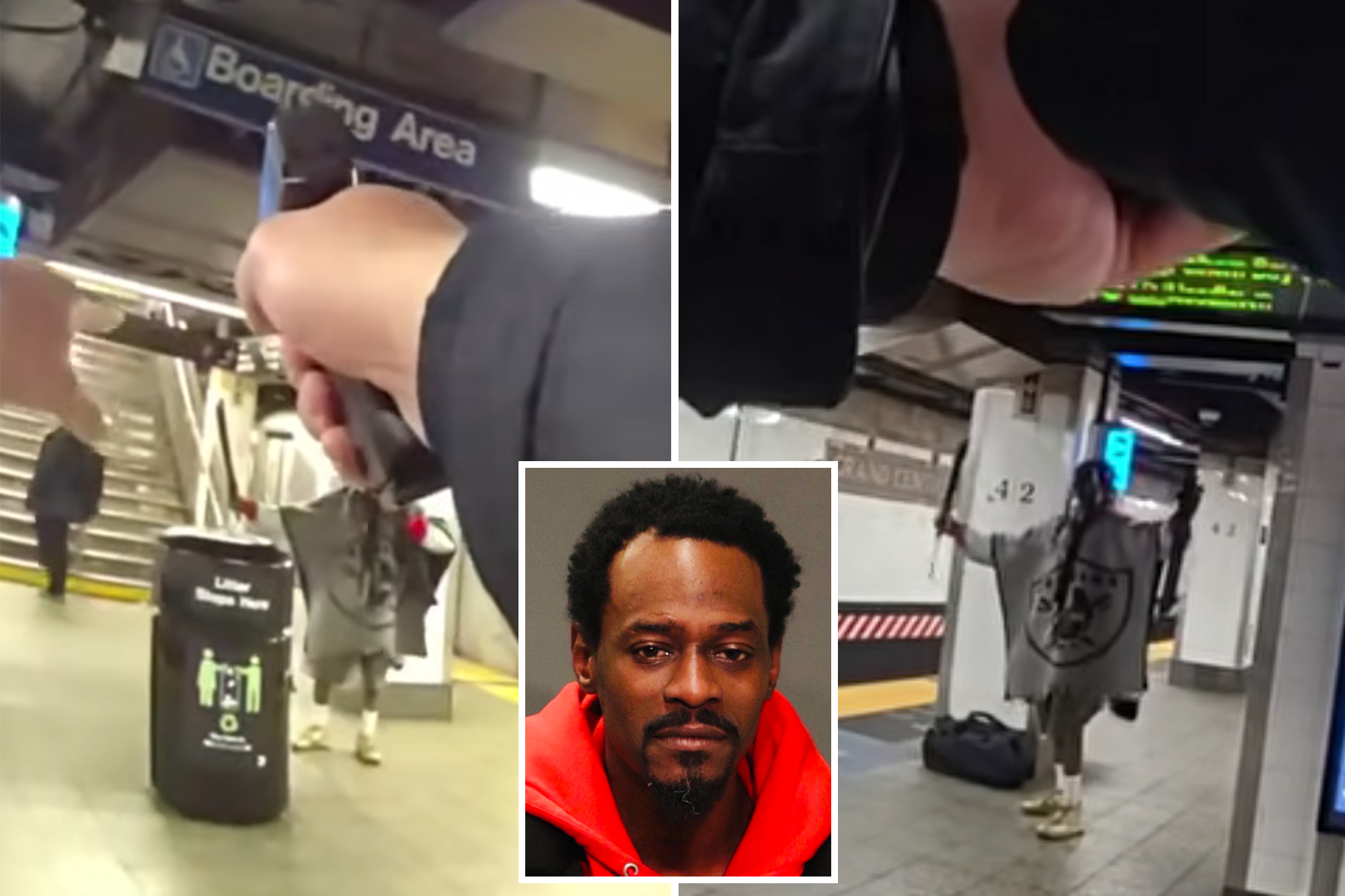
On April 11, 2024, New York City's Grand Central Station became the epicenter of a violent incident that has left the city reeling. The NYPD released harrowing bodycam footage showing officers confronting a suspect armed with a machete, resulting in a fatal police shooting. This incident, captured on video, has sparked national attention and raised critical questions about public safety and emergency response protocols.
What Happened in the Bodycam Footage?
The footage, released by the NYPD on Friday, depicts a tense confrontation between two officers and Anthony Griffin, 44, who had previously slashed three individuals with a machete. The video shows Griffin, described as 'defiant' by authorities, aggressively attacking passengers at the subway station. Officers responded with immediate force, leading to a fatal shot during the chaos.
According to the NYPD, Griffin had a history of mental health issues and had been flagged by the police for his behavior, but the attack on the three passengers—referred to as 'straphangers'—led to a swift, life-threatening situation. The video, which the police department described as 'graphic,' has been widely shared online, with many calling it a 'turning point' in understanding how bodycam technology can document critical moments.
Why Bodycam Footage Matters in Public Safety
Bodycam footage has become a vital tool for transparency and accountability in law enforcement. In this case, the video provided crucial evidence of the events unfolding in real time, allowing the NYPD to confirm the sequence of actions and the suspect's behavior. This kind of footage helps reduce misunderstandings and provides a clear record of what happened, which is especially critical in high-stress situations.
- The footage shows the exact moment the suspect attacked passengers, giving context to the police response.
- It highlights the importance of rapid response in preventing further harm.
- It serves as a case study for how bodycams can improve police accountability and public trust.
Experts have emphasized that bodycam footage is not just a recording device but a critical component of modern policing strategies. It allows for detailed analysis of incidents, helping to identify patterns and improve training. The Grand Central incident is a prime example of how this technology can capture the immediacy of a crisis.
The incident has also raised broader questions about the role of mental health in violent incidents. Griffin's history of mental health issues suggests that addressing these issues in law enforcement practices could prevent future crises. The bodycam footage, while capturing a traumatic moment, also provides a window into the complexities of mental health and public safety.
As the NYPD continues to review the footage, the incident underscores the need for better coordination between mental health services and law enforcement. The video’s release has also sparked a national conversation about the use of bodycam technology in high-risk situations.