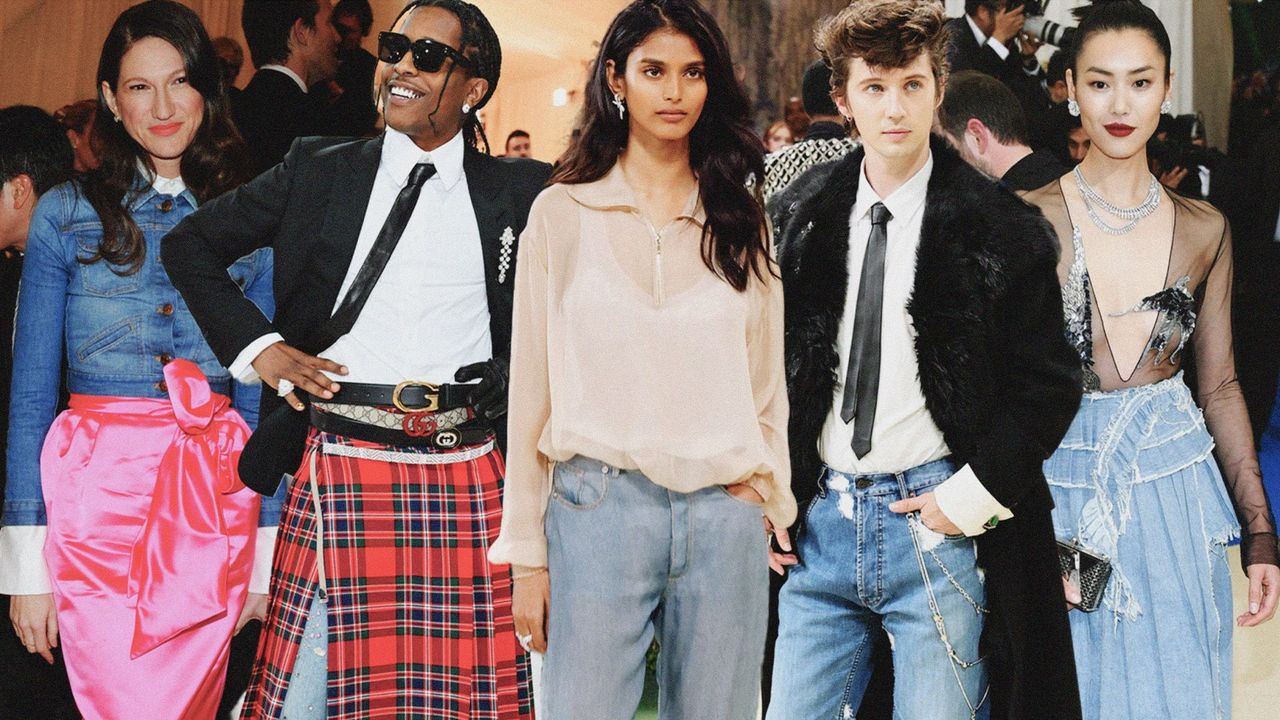
In the latest chapter of fashion history, Indian model Bhavitha Mandava’s unexpected choice of jeans and a basic top at the 2026 Met Gala has ignited a global conversation about cultural representation and the future of high fashion. What initially seemed like a simple, almost accidental appearance on the red carpet has become a catalyst for redefining what constitutes 'high art' in the fashion world. Mandava’s decision to wear jeans—a garment traditionally associated with casual, everyday wear—has challenged the industry’s long-standing preference for couture and luxury, sparking debates about inclusivity and authenticity in global fashion.
Historically, the Met Gala has been a stage for avant-garde fashion, where designers like Yves Saint Laurent and Marc Jacobs have pushed boundaries with experimental silhouettes and luxurious materials. Yet, in 2026, Mandava’s choice broke the mold. Her outfit, a pair of classic blue jeans and a white cotton top, was not just a personal style statement—it was a deliberate move to highlight the importance of cultural authenticity in fashion. The controversy quickly spread across social media, with critics arguing that jeans are too 'casual' for the event, while supporters hailed it as a bold return to practicality in an era of climate crisis and fast fashion.
Why jeans at the Met Gala?
Mandava’s outfit didn’t just challenge fashion norms—it redefined the conversation around cultural representation. By choosing an outfit that reflected her Indian roots—such as the use of traditional Indian fabrics in a minimalist form—she highlighted the growing demand for diverse voices in high fashion. Her decision to avoid the typical 'high fashion' aesthetics of the event, like elaborate costumes and excessive ornamentation, resonated with a generation that increasingly values sustainability and ethical production.
- Authenticity over extravagance: Mandava’s jeans and top were chosen for their durability and minimal environmental impact, a stark contrast to the industry’s reliance on fast fashion and disposable materials.
- Cultural inclusivity: Her outfit incorporated subtle nods to Indian textile traditions, such as the use of natural dyes and handwoven fabrics, without overtly referencing specific cultural symbols.
- Practicality in a changing world: With the fashion industry responsible for 10% of global carbon emissions, Mandava’s choice emphasized the need for sustainable, low-impact garments.
The controversy around Mandava’s outfit has also highlighted the tension between tradition and innovation in fashion. While some critics argue that jeans are 'too casual' for an event like the Met Gala, Mandava’s response to the backlash has been a call for greater understanding of global fashion trends and the role of cultural identity in shaping modern style.
The Met Gala’s history has always been a microcosm of broader societal shifts. From the 1990s to the present, it has been a platform for social commentary, often reflecting the cultural and political climate of the time. In 2026, Mandava’s appearance is part of a larger movement toward more inclusive, sustainable, and authentic fashion practices. The event’s evolution continues to be a barometer for how the fashion industry adapts to changing values and demands.