The Eta Aquarid Meteor Shower: Your Guide to Witnessing Halley’s Comet’s Celestial Legacy

Editor 10 May, 2026 ... min lectura

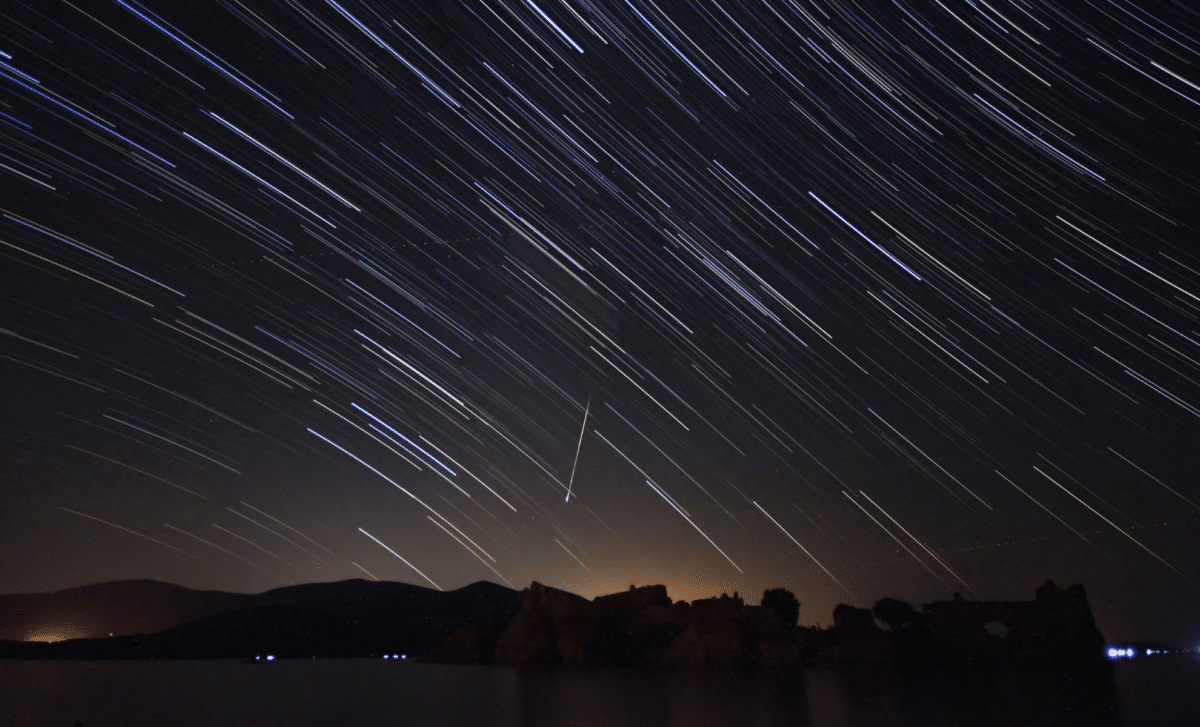
As summer's first meteor shower approaches, astrophysicists and skywatchers worldwide are preparing for an extraordinary display of celestial fireworks: the Eta Aquarid meteor shower. This annual event, linked to the remnants of Halley’s Comet, promises a dazzling spectacle of meteors streaking across the night sky. Unlike other showers, the Eta Aquarid stands out for its speed and intensity, offering a rare chance to observe the legacy of a celestial body that has captivated humanity for centuries.

Originating from the debris trail of Halley’s Comet—a comet that last visited our solar system in 1986—the Eta Aquarid is a prime example of how cosmic phenomena connect us to the past. Halley’s Comet, visible from Earth every 76 years, is known for its periodicity and dramatic tail, but its debris field creates a unique meteor shower when Earth passes through its path. This year’s peak, expected around May 5–6, coincides with the full moon, adding an extra layer of complexity to the viewing experience.

Why Is the Eta Aquarid Special?

The Eta Aquarid is one of the fastest meteor showers, with meteors traveling at speeds exceeding 130 km/s. This high velocity results in bright, short-lived meteors that leave behind vivid ionized trails—often called 'fireballs'—which can last up to 10 seconds. Unlike the Perseids or Lyrids, which are more common and predictable, the Eta Aquarid’s unpredictability makes it a coveted target for dedicated astronomers and amateur observers alike.

  • Peak Timing: The shower peaks on May 5–6, a critical window for optimal viewing
  • Best Viewing Conditions: Clear skies over the Northern Hemisphere, especially in open fields away from city lights
  • Unique Characteristics: High-intensity meteors that can be seen from equatorial regions up to 20 degrees north of the equator

While the Eta Aquarid is often overshadowed by the more well-known Perseids in August, its association with Halley’s Comet provides a direct link to one of the most famous comets in history. This connection isn’t just a coincidence—it’s a testament to the intricate dance of celestial mechanics that governs our solar system.

How to Maximize Your Viewing Experience

For first-time observers, the Eta Aquarid’s fast-moving meteors can seem elusive. Yet with the right preparation, anyone can capture its beauty. Start by finding a dark location with minimal light pollution. Use a red-light flashlight to preserve night vision, and allow your eyes to adjust to the darkness for 20–30 minutes before attempting observation.

Additionally, timing is crucial. The peak period of the Eta Aquarid coincides with the first week of May, a time when many regions experience favorable weather conditions. For instance, in the Northern Hemisphere, the shower is best observed from mid-latitude regions, where the constellation Aquila provides an ideal backdrop for tracking meteors.

One of the most fascinating aspects of the Eta Aquarid is its connection to Halley’s Comet. This link isn’t just historical—it’s a direct result of the comet’s orbital path intersecting with Earth’s orbit. Each year, as Earth passes through the debris field left behind by Halley’s Comet, we witness the Eta Aquarid, a fleeting but meaningful reminder of the cosmic interactions that shape our night sky.