

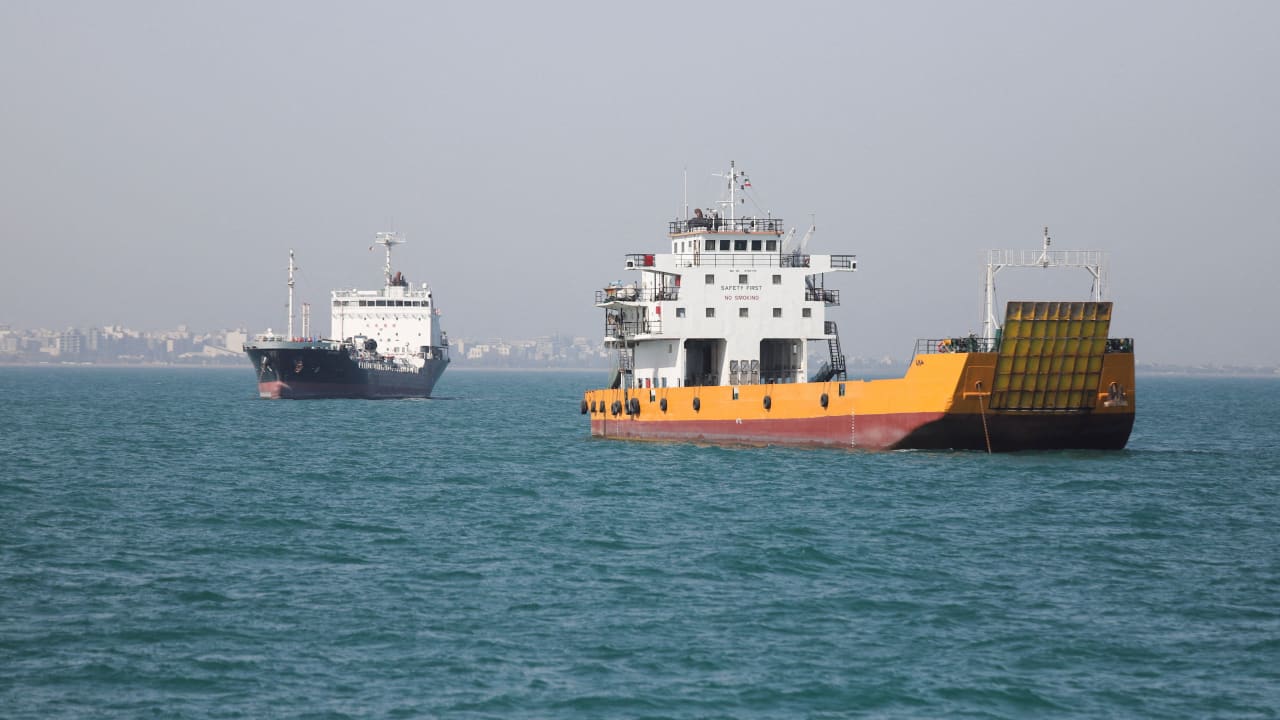
As tensions in the Persian Gulf continue to escalate, a new and alarming pattern has emerged: ships off Qatar's coast are increasingly becoming targets of hostile actions. Recent incidents involving fires on cargo vessels near Doha have raised urgent questions about the safety of maritime routes and the broader implications for global trade. These events, while seemingly isolated, are part of a larger strategic shift in regional security dynamics.
Is Iran's New Strategy Targeting Qatar's Maritime Infrastructure?
The latest incident on May 10, 2026, saw a cargo ship caught in a fire after being struck by an unknown projectile near Qatar's coastline. This event, reported by The Associated Press, has become the latest example of how the geopolitical standoff between Iran and its neighbors is being tested through increasingly direct and dangerous actions.
Analysts suggest that Iran's recent moves—such as drafting a bill to formalize its management of the Strait of Hormuz, which includes clauses forbidding passage to vessels from 'hostile states'—are part of a broader strategy to assert control over critical maritime chokepoints. This strategy has been tested by incidents like the recent fire on the cargo ship, which appears to be linked to the ongoing tensions in the region.
What's particularly concerning is that these incidents are not isolated. For example, a bulk carrier recently reported to have been hit by an 'unknown projectile' near Qatar, as noted by the UK Maritime and Coastguard Agency (UKMTO). These events suggest a pattern where maritime infrastructure is being deliberately targeted to disrupt economic activity and political stability in the region.
Why Does Qatar's Coast Become a Target?
Qatar's strategic location at the mouth of the Persian Gulf makes it a prime target for geopolitical maneuvering. The country's proximity to the Strait of Hormuz and its role as a key hub for oil and gas exports to global markets have made it a focal point in the ongoing regional conflict. Recent incidents, including a tanker being struck by a drone off the Doha coast after a Qatari ship broke the Hormuz blockade, highlight the increasing sophistication of these attacks.
Moreover, the recent incident involving a tanker being hit by a drone after a Qatari ship broke the Hormuz blockade demonstrates the evolving tactics used by actors in the region. This incident, which has been linked to Iran's warnings about US sanctions supporters, shows how the conflict has shifted from indirect economic pressures to more direct physical threats to shipping lanes.
- The strategic location of Qatar's coast near the Strait of Hormuz makes it vulnerable to attacks on maritime routes.
- Iran's new bill to formalize management of the Strait of Hormuz is a direct attempt to control who can transit through this critical waterway.
- The use of drones and 'unknown projectiles' indicates a shift from traditional naval confrontation to more covert, high-tech operations.
These incidents are not just about physical damage to ships; they represent a strategic shift in how regional powers are using maritime infrastructure as a tool for political and economic coercion. As the conflict between Iran and its neighbors intensifies, the implications for global trade and energy security are profound.



