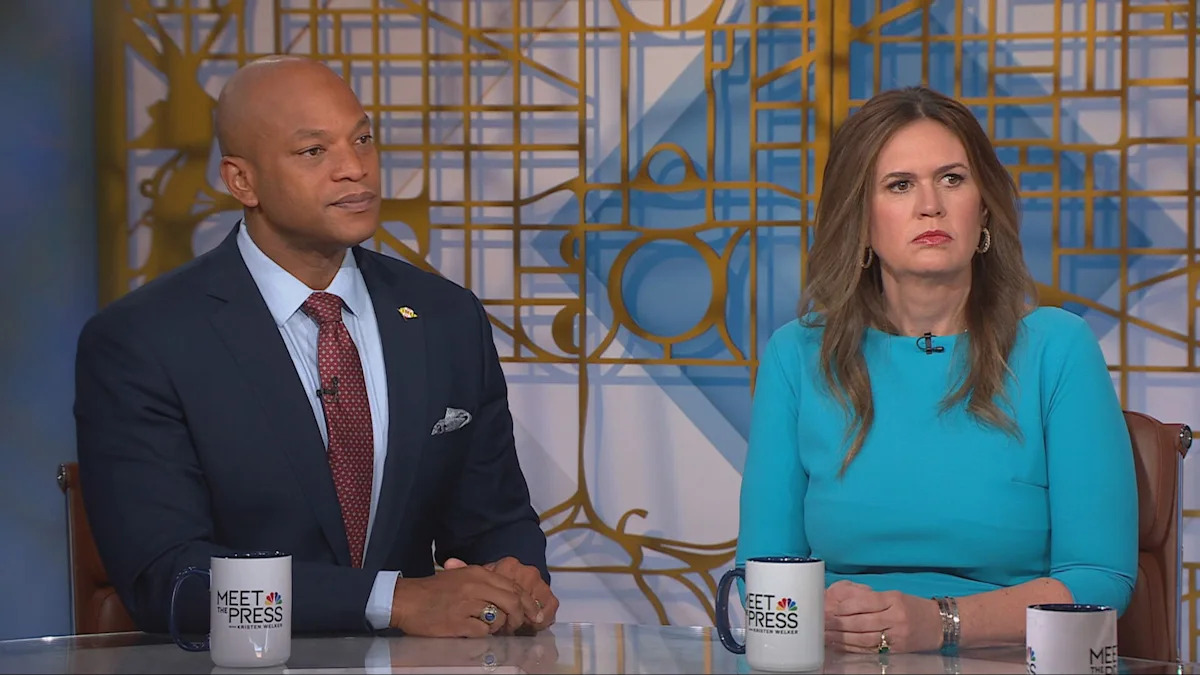
When Governor Wes Moore of Maryland and Governor Sarah Huckabee Sanders of Arkansas unexpectedly joined forces on maternal health, it marked a pivotal moment in the national conversation about a crisis that claims over 700 lives annually in the United States. This rare bipartisan collaboration, highlighted by their joint commitment to maternal health investments, signals a potential turning point in addressing a systemic issue that has long been neglected by policymakers.
Maternal mortality rates in the U.S. have seen a concerning trend, with Black women being three to four times more likely to die from pregnancy-related complications than their white counterparts. This disparity is rooted in historical inequities, limited access to care, and systemic underfunding of maternal health programs. Yet, in a notable shift, Moore and Sanders have become vocal advocates for actionable solutions, focusing on expanding access to care, addressing racial disparities, and promoting evidence-based interventions.
Why Now?
While the U.S. has made incremental progress in maternal health, the recent surge in maternal mortality rates has forced state leaders to act. The governors' collaboration emerged from a shared understanding that traditional approaches—such as isolated funding initiatives or fragmented policy efforts—have not delivered meaningful results. Instead, they have prioritized a coordinated strategy that includes expanding Medicaid eligibility, increasing funding for community-based maternal health centers, and launching public awareness campaigns targeting high-risk populations.
- Expanding Medicaid eligibility to cover low-income pregnant individuals
- Implementing community health worker programs to provide culturally competent care
- Establishing data-driven early intervention systems for high-risk pregnancies
These concrete steps reflect a recognition that maternal health is not just a medical issue but a socioeconomic one. By addressing the root causes of disparities—such as poverty, lack of transportation, and language barriers—the governors aim to create a more inclusive and effective system.
Moore and Sanders' partnership is significant because it breaks the partisan divide that has historically hindered progress on maternal health. Their collaboration is not just a tactical move but a strategic acknowledgment that the crisis demands unity across political lines. The governors have emphasized the need for long-term, sustained investment rather than short-term fixes, recognizing that maternal health is a complex, multi-faceted issue requiring a comprehensive approach.
Their efforts have drawn attention from public health experts, who praise the governors for their willingness to tackle a deeply entrenched problem. Dr. Jennifer Smith, a leading maternal health researcher, notes that 'this kind of cross-state, cross-partisan collaboration is rare and could set a precedent for future policy efforts.'
However, challenges remain. Critics argue that scaling these initiatives across diverse states will require significant resources and careful coordination. Additionally, the success of these efforts will depend on the ability of local communities to adapt and implement these strategies effectively. Yet, the governors' commitment to transparency and community engagement provides a promising framework for future action.