Ice Volcanoes Erupting on Interstellar Comet?! You Won't Believe This!

Ice Volcanoes Erupting on Interstellar Comet?! You Won't Believe This!

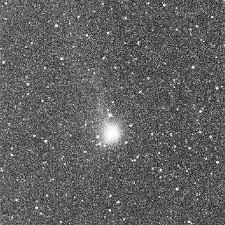
Scientists have made a fascinating discovery about interstellar comet 3I/ATLAS: it seems to be sporting erupting "ice volcanoes"! New observations suggest that as this cosmic visitor approached our sun, a series of cryovolcanoes, playfully nicknamed "ice volcanoes," became active on its surface.

This intriguing phenomenon is detailed in a study posted on the preprint server arXiv. Researchers believe the activation of these icy jets can be attributed to the comet's unique composition. According to lead author Josep Trigo-Rodríguez, the comet's surface material surprisingly resembles that of icy trans-Neptunian objects – dwarf planets and other bodies orbiting beyond Neptune in our own solar system.

What Does This Mean?

If confirmed, this similarity suggests that despite originating from another star system, comet 3I/ATLAS shares unexpected commonalities with objects in our cosmic backyard. "We were all surprised," Trigo-Rodríguez told Live Science, highlighting the remarkable resemblance between the comet's surface and trans-Neptunian objects.

A Rare Opportunity for Discovery

Since its discovery in July, comet 3I/ATLAS has sparked considerable speculation, including some outlandish theories about alien spacecraft. However, the majority of astronomers are confident that it's a genuine comet hailing from an unknown star system. As only the third interstellar object ever recorded, 3I/ATLAS presents researchers with a rare chance to learn more about the conditions around other stars and delve into the distant past – potentially billions of years older than our own solar system.

  • Cryovolcanism: Eruptions of icy materials on the comet's surface.
  • Trans-Neptunian Objects: Objects orbiting the sun beyond Neptune, like dwarf planets.
  • Interstellar Object: An object originating from outside our solar system.

This discovery underscores the interconnectedness of the cosmos and provides valuable insights into the formation and composition of planetary systems beyond our own. Keep an eye on newsrpt.com for further updates on this exciting story!