Meloni’s Strategic Pivot: EU Security and Ukraine as a Double-Edged Sword

Editor 15 Apr, 2026 ... min lectura

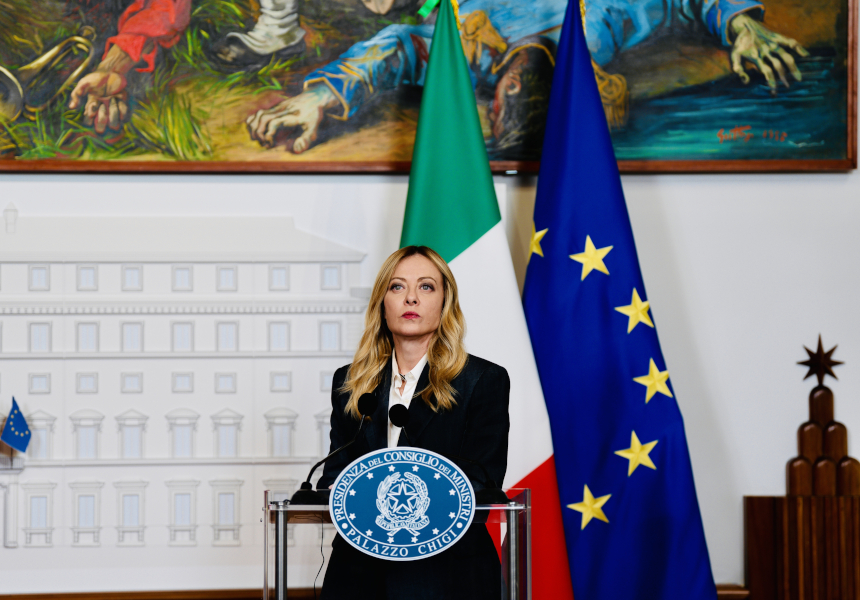
The recent high-stakes meeting between Italian Prime Minister Giorgia Meloni and Ukrainian President Volodymyr Zelensky at the Quirinal Palace in Rome has reignited debates about Italy’s role in European security. This diplomatic engagement, framed within a broader context of escalating geopolitical tensions, underscores the delicate balancing act Italy must perform as a key player in transatlantic alliances. As the 15th of April 2026 saw these leaders meet at the Palazzo Chigi, the conversation centered on Ukrainian sovereignty, EU defense policy, and the implications of a potential European security crisis.

Is Italy’s Support for Ukraine a Strategic Imperative?

Italy’s longstanding commitment to Ukraine has evolved from a humanitarian stance to a critical component of its foreign policy. Since Meloni assumed office in 2022, her government has emphasized proactive defense cooperation with Ukraine, positioning Italy as a stability anchor in a fractured EU. The recent meeting with Zelensky wasn’t just a token gesture—it was a calculated move to align Italian foreign policy with broader European security objectives. This aligns with Italy’s historical role as a neutral power in regional conflicts, a legacy rooted in its post-WWII diplomatic tradition.

Key to this strategy is the EU security architecture. Italy’s push for stronger EU coordination on defense matters has been met with skepticism from some member states, particularly those wary of increased military spending. Yet, Meloni’s insistence on integrated security reflects a broader shift in European foreign policy—a move that could redefine the bloc’s approach to crisis management.

How Does This Fit into Global Power Dynamics?

  • Short-term: Immediate aid to Ukraine, including military and financial support, to counter Russian aggression.
  • Mid-term: Long-term integration of Ukraine into EU security structures, such as NATO and EU defense frameworks.
  • Long-term: Reconfiguration of EU defense policy to address emerging threats, including cyber warfare and hybrid conflicts.

The meeting highlighted a critical tension: while Italy supports Ukraine’s sovereignty, it also seeks to maintain strategic autonomy from the US and NATO. This duality is emblematic of the European security dilemma—a challenge that has persisted since the Cold War.

Analysts argue that Meloni’s approach is a response to real-world instability in the Black Sea, where Russian aggression has disrupted traditional alliances. By positioning Italy as a coordinator between Western powers and Ukraine, Meloni is not only advancing national interests but also attempting to reinforce EU unity in a fragmented landscape.

The implications of this meeting extend beyond immediate aid. It signals a potential shift in European defense policy, where the EU might move toward more proactive and integrated security measures, rather than reactive ones. This is crucial for ensuring that the EU can respond effectively to emerging threats, from cyber attacks to large-scale military operations.