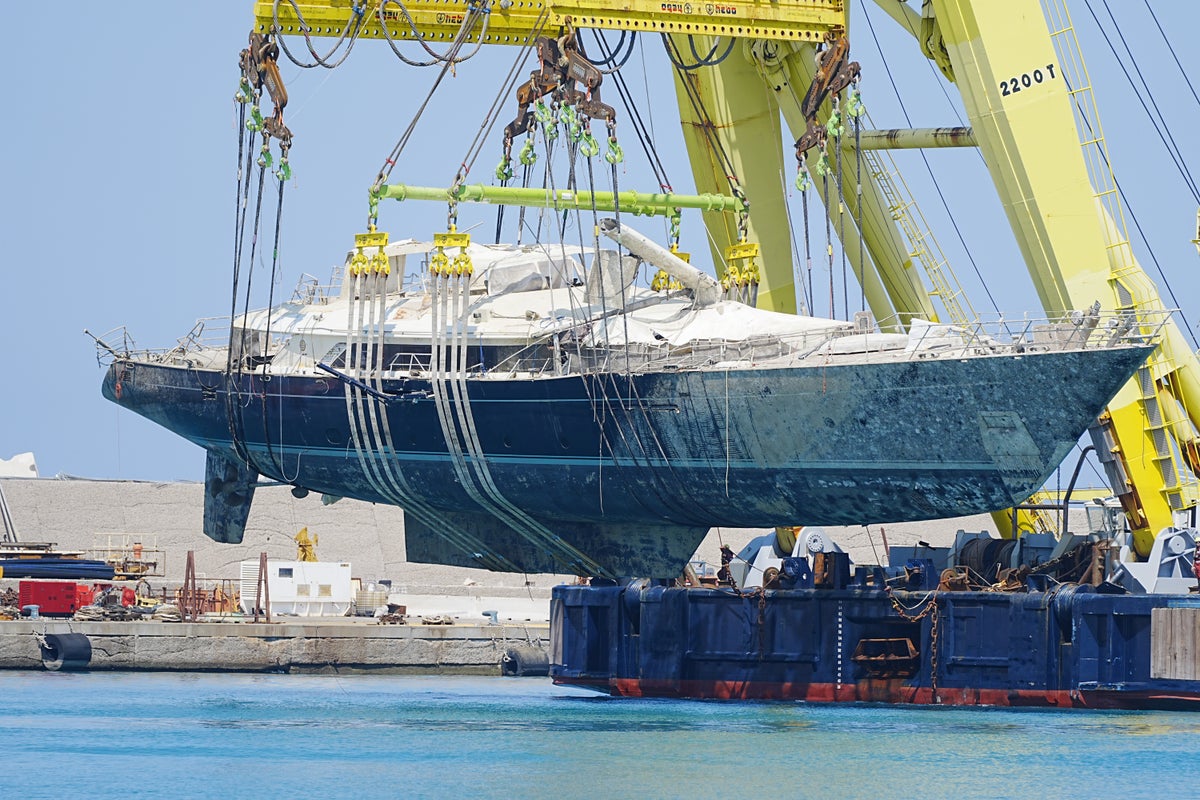
Recent investigations have overturned long-standing assumptions about the sinking of the 56-meter Bayesian superyacht near Sicily on August 19, 2024. Initial reports had attributed the disaster to severe storm conditions, but a fresh analysis by Italian authorities has concluded that weather was not the primary factor behind the vessel’s catastrophic loss of buoyancy.
According to the preliminary report released by the Italian Coast Guard on May 1, 2026, the Bayesian—a luxury vessel built with advanced engineering for high-speed travel—was found to have structural integrity issues that led to its rapid descent into the sea. The investigation highlighted discrepancies between the vessel’s design specifications and its actual performance during the incident, suggesting that the sinking was a result of pre-existing mechanical failures rather than external meteorological forces.
Did the storm cause the sinking?
One of the most critical questions in maritime safety has been whether extreme weather can overwhelm a superyacht’s resilience. This case has revealed that even in the absence of severe storms, a vessel’s structural design and maintenance protocols can critically impact its safety. The report emphasizes that the Bayesian’s trajectory and sinking pattern did not align with typical storm-related damage patterns, indicating a more complex failure mechanism.
- The Bayesian was equipped with state-of-the-art hydrodynamic systems that were not designed to withstand prolonged stress from heavy weather
- Post-incident inspections revealed critical cracks in the vessel’s hull, which had been previously undetected through standard maintenance checks
- Emergency response protocols were activated too late, exacerbating the situation
The findings challenge the common misconception that all maritime disasters are solely weather-driven. They underscore the importance of proactive structural maintenance and rigorous engineering testing in high-value, high-risk maritime assets.
Maritime safety experts have welcomed the report as a significant step toward refining risk assessment models for superyachts. The incident has sparked discussions about the integration of predictive analytics into maritime safety systems, particularly in regions prone to sudden environmental changes.