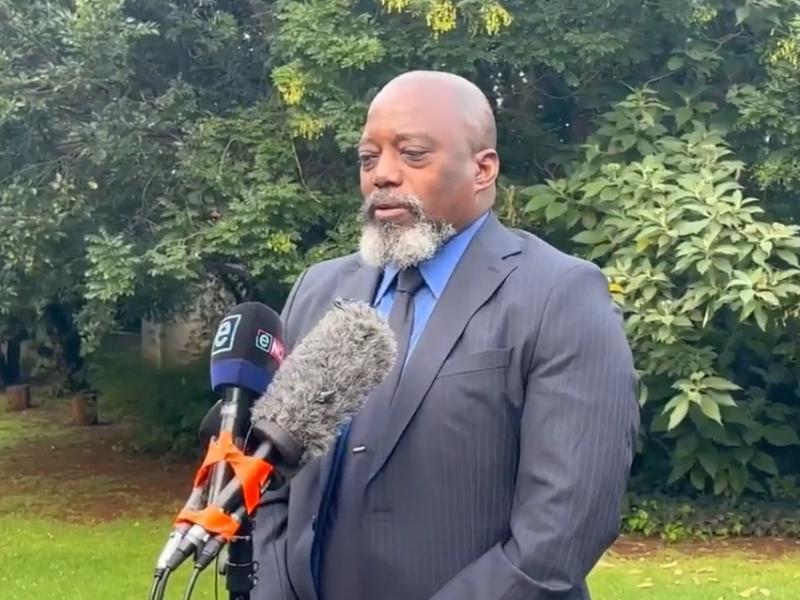
Joseph Kabila, the former President of the Democratic Republic of Congo (DRC), remains at the center of international diplomatic tensions following U.S. sanctions imposed on his political connections to the African Force Command (AFC) and the M23 rebellion. These sanctions, which emerged as part of a broader strategy to counteract destabilizing forces in the Great Lakes region, highlight the complex interplay between regional security, political legitimacy, and economic governance. The DRC has long been a focal point for global powers seeking to balance their interests with local stability, and Kabila's role in this dynamic cannot be overstated.
How U.S. Sanctions Target Kabila's Network: What the Evidence Shows
Washington's decision to sanction Kabila for his alleged ties to the AFC and M23 rebels was not isolated. The move reflects a growing concern over the erosion of peace processes in the DRC, particularly after the 2026 African Union summit, where the country’s role in regional security was critically assessed. U.S. officials have framed these sanctions as a direct response to the failure of diplomatic channels to address the M23 insurgency, which has repeatedly threatened to undermine the DRC’s sovereignty and stability.
Analysts point to the 2026 African Union press conference as a pivotal moment where Kabila’s influence was scrutinized. The sanctions, described by French journalist Jacquemain Shabani as a 'logical consequence' of the sabotage of peace negotiations, underscore the urgency of addressing the underlying causes of conflict in the DRC.
- The sanctions target specific financial transactions linked to Kabila’s government, focusing on illicit asset transfers to groups like the AFC and M23
- They aim to disrupt the flow of resources that have historically supported anti-government movements in the DRC
- The move has been criticized by some African Union diplomats as an overreach of U.S. influence in regional governance
The implications of these sanctions extend beyond immediate financial restrictions. They signal a shift in U.S. foreign policy toward more targeted, evidence-based interventions in post-conflict regions. This approach is part of a broader effort to align with the UN’s Sustainable Development Goals, particularly in addressing the root causes of conflict in the Great Lakes region.
Why This Matters for the DRC's Future
The DRC’s ongoing political challenges, including corruption, economic decline, and fragmented governance, have created a vacuum that militant groups like the M23 exploit. Kabila’s legacy, once seen as a stabilizing force, is now under scrutiny as his associations with groups like the AFC are linked to increased violence in eastern DRC.
For the DRC to recover from these challenges, it must address the deep-seated issues of governance and economic mismanagement that have plagued its political institutions. The U.S. sanctions, while controversial, are part of a larger push to hold accountable those who undermine peace efforts, ensuring that future peace agreements are not just symbolic but are built on sustainable, inclusive mechanisms.
As the DRC navigates these complex dynamics, the international community must prioritize long-term solutions that respect the country’s sovereignty while fostering genuine dialogue and transparency. Without such measures, the risk of renewed conflict remains high, and the prospects for lasting peace are dim.