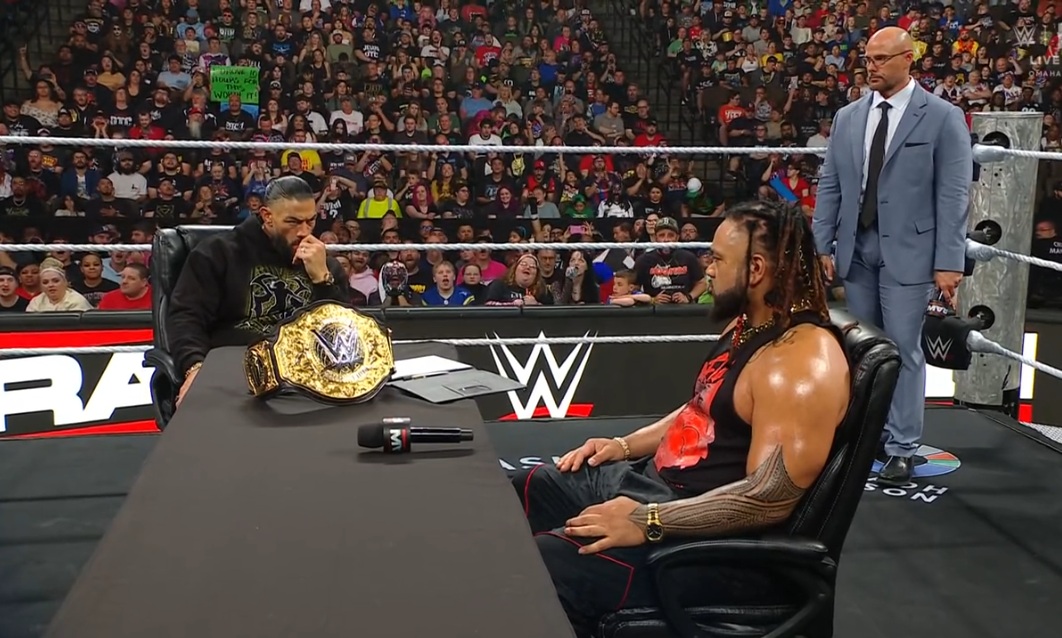
As the WWE Universe prepares for Backlash 2026, one match has already captured global attention: the highly anticipated clash between the undisputed champion, Roman Reigns, and the enigmatic Jacob Fatu. This isn't just another match—it's a seismic shift in how wrestling storytelling is crafted, blending raw athleticism with unpredictable narrative twists. The aftermath of their encounter at Backlash 2026 reveals more than just a physical confrontation; it's a strategic masterclass in modern wrestling's evolving dynamics.
At the heart of this controversy lies a critical question: Can the most dominant figure in WWE, Roman Reigns, be truly vulnerable to a seemingly unassuming challenger like Jacob Fatu? The answer, as revealed by the results, is a resounding yes. Jacob Fatu's aggressive post-match attack on Roman Reigns wasn't just a victory lap—it was a calculated move to redefine the narrative around power dynamics and storytelling in professional wrestling. This incident has sparked widespread discussion among fans, highlighting the growing importance of authenticity in athletic performances and narrative construction.
Why did Jacob Fatu attack Roman Reigns?
According to recent reports, Jacob Fatu's actions were not spontaneous but rather a deliberate response to a long-standing narrative strategy. Fatu's statement to the media, 'It's dumb to assume WWE will book me to lose,' has become a rallying cry for fans who demand more transparency in booking decisions. This move underscores a pivotal shift in WWE's approach to storylines, where the lines between winner and loser are increasingly blurred.
- Real-time adjustments in match outcomes have led to unexpected outcomes, challenging traditional booking patterns.
- Strategic storytelling now prioritizes emotional engagement over predictable results.
- Fan-driven narratives are gaining traction, with viewers demanding more authentic and impactful storylines.
The implications of this incident extend beyond a single event. It signals a broader transformation in how wrestling narratives are constructed, moving away from the 'winner-takes-all' model toward a more nuanced, character-driven approach. This shift has significant implications for the future of professional wrestling, particularly in terms of audience engagement and long-term fan loyalty.
What does this mean for the future of WWE storytelling?
As the wrestling industry evolves, the Backlash 2026 incident serves as a turning point. It demonstrates that even the most dominant figures can be challenged by unexpected forces, and that successful storytelling requires adaptability and a deep understanding of audience psychology.
For fans, this incident is a reminder that the true power in wrestling lies not just in physical dominance, but in the ability to connect with viewers on a human level. Jacob Fatu's actions have shown that a well-timed, emotionally resonant moment can have a profound impact on how stories are perceived and remembered.
Looking ahead, the industry must continue to innovate while respecting the core values of authenticity and storytelling. As the next chapter of wrestling unfolds, the legacy of Backlash 2026 will be defined by its willingness to embrace uncertainty and uncertainty in a way that resonates with the audience's deepest desires.