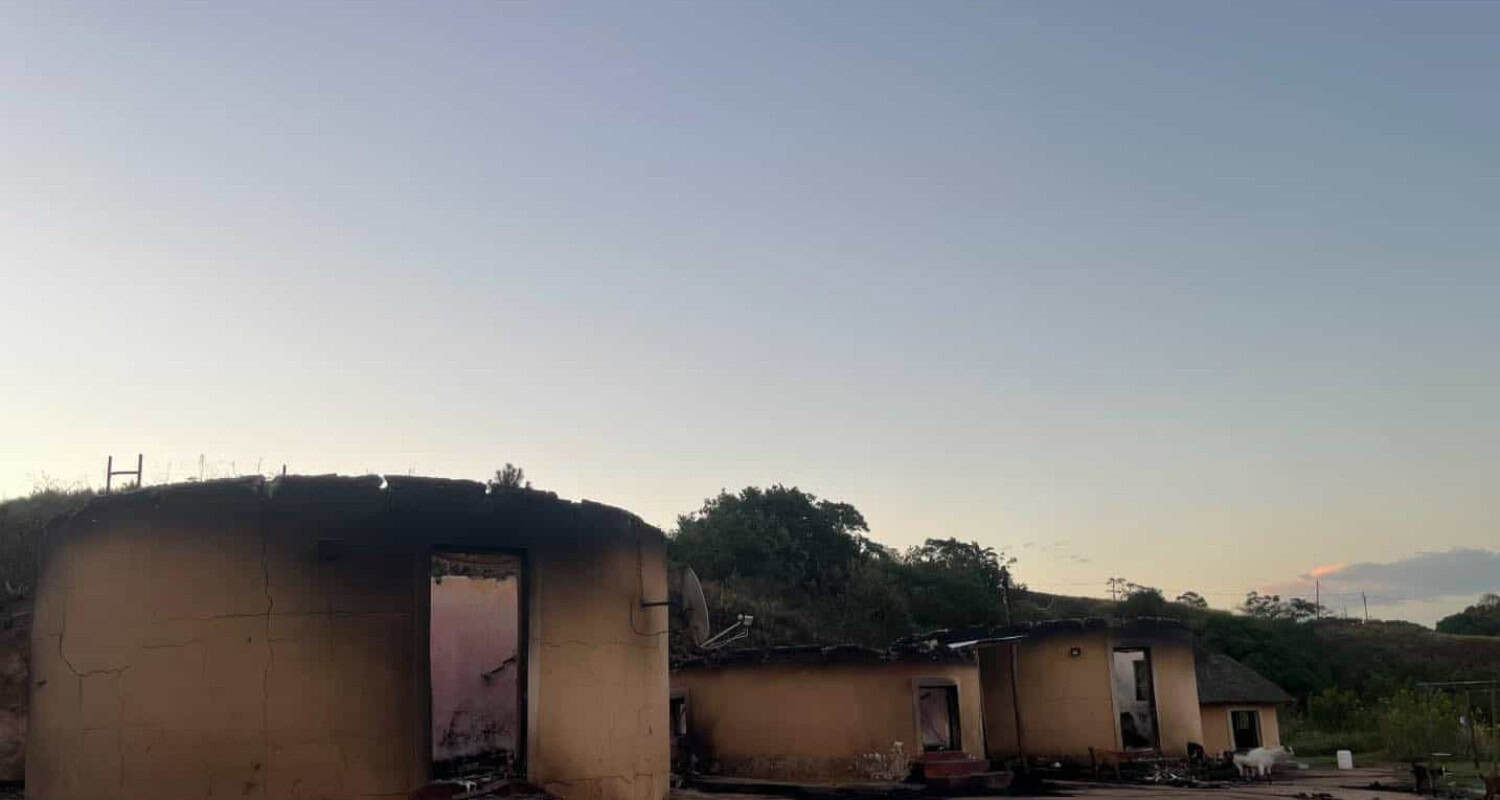
South Africa’s political landscape has been shaken by a recent incident involving prominent anti-immigrant figure Ngizwe Mchunu. On May 10, 2024, his homestead in Mbumbulu, near Durban, was set ablaze in what appears to be an arson attack. The event has sparked widespread speculation about its implications for South African socio-political dynamics and the growing influence of anti-immigrant rhetoric in local governance.
Ngizwe Mchunu, known for his leadership role in the anti-immigrant organization Amabhinca, has been a vocal critic of foreign nationals in South Africa. His home, which served as a hub for organizing anti-immigrant protests, was discovered fully engulfed in flames by local residents. According to reports from the Durban-based media outlet Daily Sun, the fire was discovered by neighbors who reported seeing flames spreading across his property in the early hours of May 10.
Why does this matter? How does it reflect broader societal tensions?
The destruction of Mchunu’s home is more than just a physical event—it signals a critical juncture in South Africa’s ongoing struggle with xenophobia and social cohesion. As one of the most prominent voices in the anti-immigrant movement, Mchunu’s influence extends beyond his rhetoric, shaping policy debates and grassroots mobilization around immigration control. His home, once a focal point for anti-immigrant campaigns, now symbolizes the volatile intersection of political activism and community safety.
- Amabhinca’s role in anti-immigrant campaigns: The group has organized numerous protests against perceived threats to local communities, often framing foreign nationals as economic competitors.
- Public perception of anti-immigrant movements: The attack highlights growing distrust in government efforts to address housing shortages and economic inequality.
- Legal and policy implications: The incident raises questions about the safety of activists and the potential for state intervention in civil conflicts.
Analysts note that Mchunu’s home, located in a predominantly Black township, was a symbol of his political influence. His leadership in Amabhinca has been criticized for promoting narratives that marginalize foreign nationals, particularly those from Eastern African nations. The fire has intensified debates about whether such movements are legitimate advocacy or a form of xenophobic extremism.
Legal experts emphasize that while Mchunu has not been formally charged in connection with the incident, the timing of the attack coincides with heightened tensions in South Africa’s post-apartheid governance structure. The government has been working to address rising xenophobic violence, but critics argue that state responses often prioritize economic stability over community safety.
The incident underscores the complex dynamics between local activism and national policy. As the country navigates its post-apartheid identity, incidents like this reveal the fragility of social cohesion in urban centers. Mchunu’s home has become a flashpoint for discussions about the role of grassroots movements in shaping public opinion and policy.