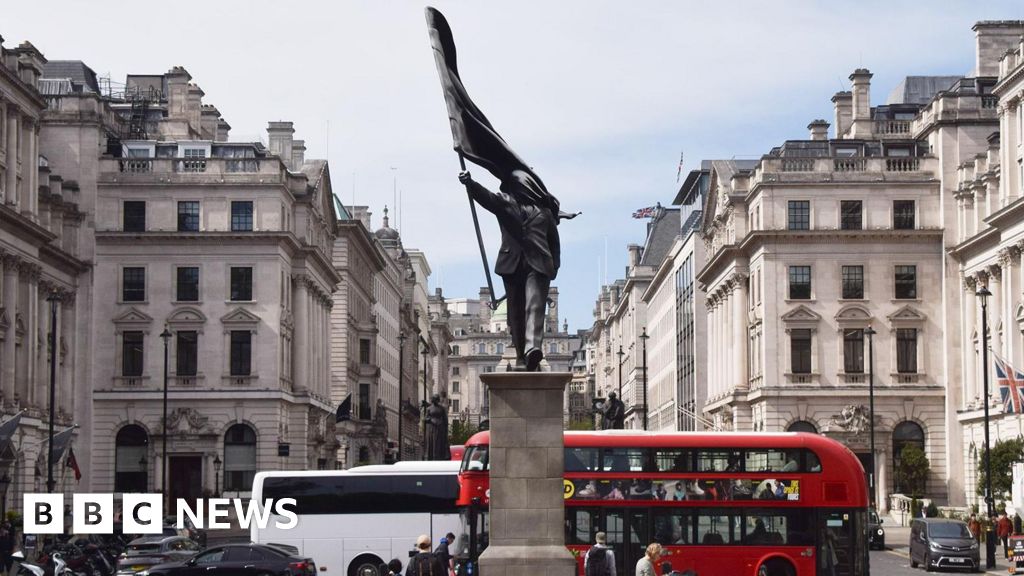
When Banksy’s latest public art piece, a striking bronze statue of a man blinded by a flag in central London, emerged on a plinth at Waterloo Place, it sparked immediate reactions across the globe. The artwork, confirmed by the renowned street artist himself, delivers a direct and unflinching critique of blind patriotism and the dangers of nationalist fervor.
Located in the heart of London, this installation marks Banksy’s most significant contribution to the city’s urban landscape in years. Unlike his usual guerrilla-style street art, this piece is a sculptural statement that challenges viewers to confront the consequences of unexamined national identity. The man’s eyes, covered by a large, vibrant flag, symbolize how nationalistic fervor can blind individuals to broader perspectives and critical thinking.
What Does Banksy’s Statue Mean for Contemporary Politics?
Artists often create works that reflect their concerns about society at large. Banksy’s choice to place this piece in a high-traffic, historically significant location like Waterloo Place—a hub for political discourse and global travelers—suggests a deliberate engagement with the city’s complex identity and the tensions between national pride and globalized citizenship.
The statue is not merely a commentary on politics, but also a reflection of the current global climate where national identity politics are increasingly polarized. By using the flag as a metaphor for the limitations of patriotism, Banksy highlights the risks of ideological rigidity and the need for critical engagement with national narratives.
- Historical context: Banksy’s work has long engaged with themes of conflict, social justice, and political dissent, drawing from his experiences in the UK and the world.
- Symbolic language: The flag, a common symbol of national identity, is here inverted to represent the dangers of blind adherence to nationalistic ideologies.
- Public engagement: The placement of the statue in a public space ensures it engages with a diverse audience, prompting reflection on national identity and its implications.
While the statue has been praised for its boldness and relevance to current events, it has also drawn criticism from some who see it as an overreach of artistic expression. The controversy underscores the ongoing tension between artistic freedom and public perception, a theme that has long been central to Banksy’s work.
Banksy’s approach to art as social commentary is not new. His previous works, such as the iconic ‘Drowning Girl’ and ‘Cow’ series, have consistently challenged societal norms and political agendas. However, this statue represents a shift towards more permanent, large-scale installations that demand a more sustained dialogue with the public.
The statue’s impact will likely be measured by its ability to spark conversations about national identity and the role of art in shaping public discourse. In a world where political polarization is on the rise, Banksy’s work reminds us that art can be a powerful tool for critical thinking and social awareness.