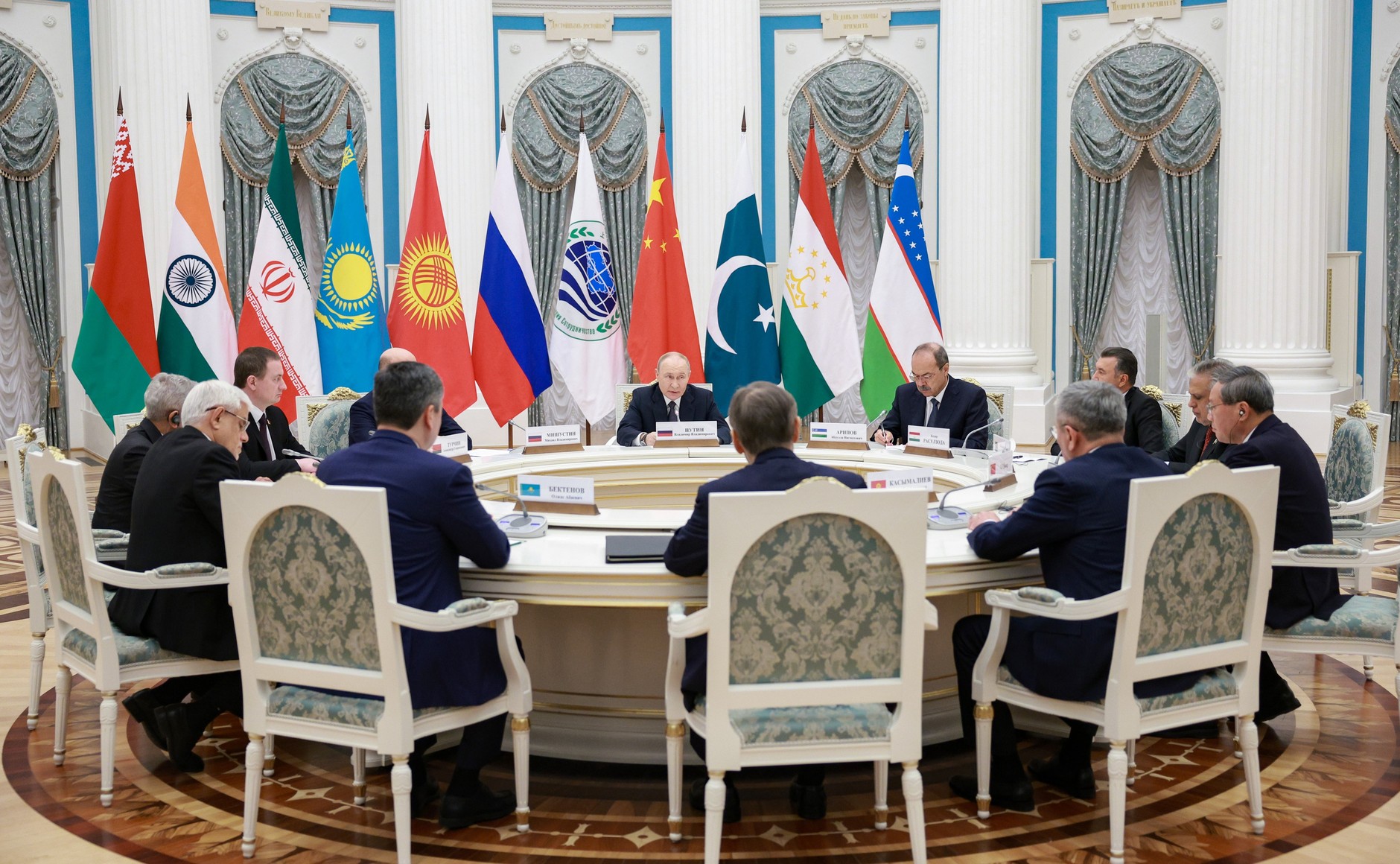
As Vladimir Putin consolidates his grip on Russian power, the nuances of his strategic recalibration become increasingly critical to global stability. With his leadership spanning over two decades, Putin’s approach has evolved from a focus on economic integration to a more assertive geopolitical stance, particularly in regions like Central Asia and the Middle East. This transformation is not merely tactical but reflects a deep-seated shift in Russia’s long-term objectives.
The recent German Finance Minister’s warning that Russia should not be the winner of the Iran war underscores the growing international unease about Russian influence in global conflicts. This statement, rooted in a pragmatic assessment of regional dynamics, highlights how Moscow’s actions in the Middle East are increasingly seen as counterproductive to its own interests. The Iran war context is critical, as it reveals Russia’s precarious position in balancing its economic and military ambitions with the realities of its neighbors.
Is Russia’s Influence in Central Asia Really Securing?
Analysis from the Eurasia Daily Monitor indicates a decline in Russian influence in Central Asia. This trend, documented since 2026, shows a marked shift from the previous era of Russian dominance to a more fragmented regional order. The Black Sea Fleet’s intrusion into Bulgarian waters and its recent harassment of Turkish grain freighters further illustrate how Moscow’s assertiveness is being met with resistance, signaling a potential erosion of its once-thriving economic and military foothold in the region.
- Central Asian states are diversifying their trade routes, reducing reliance on Russian infrastructure.
- Russian economic sanctions are increasingly impacting key sectors like energy and agriculture, weakening Moscow’s leverage.
- Local governance in Central Asia is shifting toward multilateral cooperation with global financial institutions, reducing Moscow’s influence.
These developments, while seemingly minor, collectively point to a significant transformation in the region’s political economy. The erosion of Russian economic influence is not a sudden event but a gradual process driven by both internal and external pressures.
The German Finance Minister’s statement is a direct response to these shifts, emphasizing that Russia’s involvement in the Iran war could lead to unintended consequences. This perspective is not just a policy recommendation—it’s a strategic warning that aligns with broader trends in global power dynamics.
As Russia’s combat losses in Ukraine are increasingly documented by Rosstat, the implications for Moscow’s military and economic strategy become clearer. The erosion of Russian influence in Central Asia and the strategic missteps in the Middle East are not isolated incidents but part of a larger pattern of declining confidence in Russia’s ability to project power globally.
The unseen costs of Putin’s strategies—such as the fragmentation of regional alliances and the growing distrust in Moscow’s economic and military capabilities—are now becoming apparent to even the most skeptical observers. As the geopolitical landscape shifts, the question remains: Can Russia sustain its influence without overextending itself?