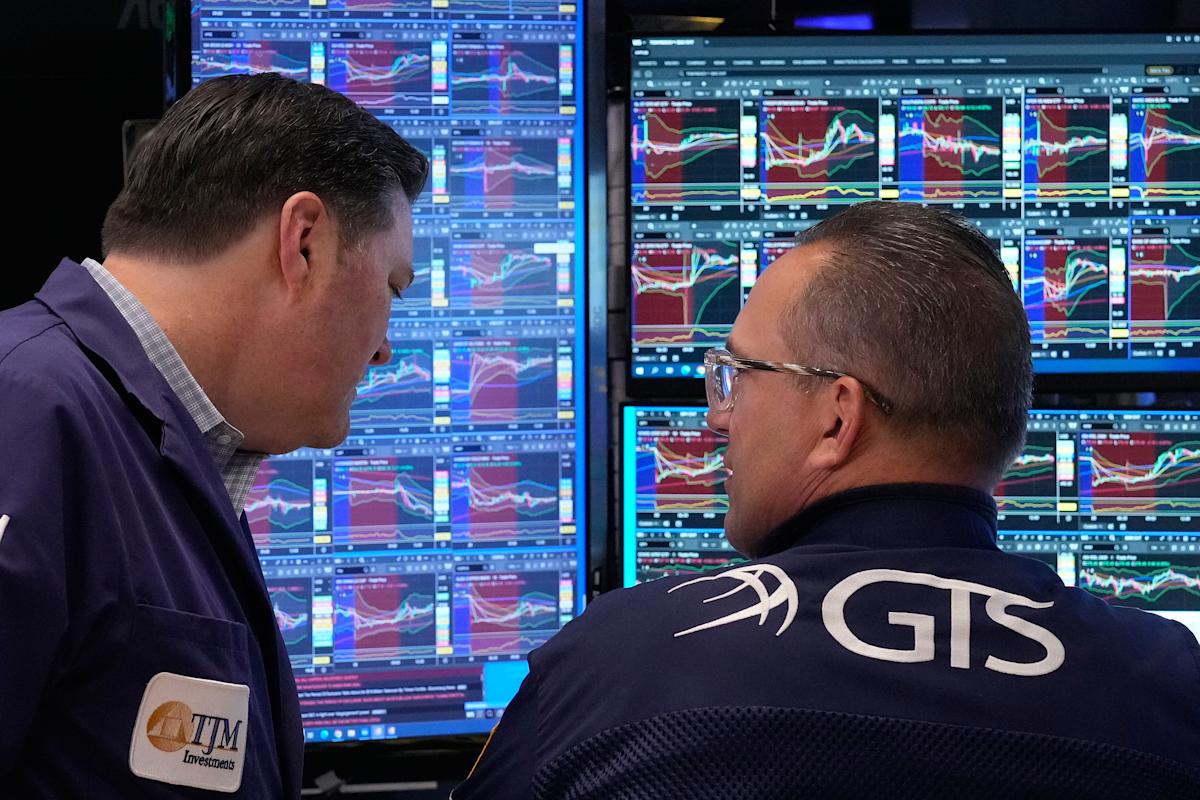
As the global financial landscape teeters between uncertainty and opportunity, the S&P 500 has become a critical barometer of investor sentiment and geopolitical tension. On Tuesday, the index dipped into negative territory as oil prices surged ahead of a pivotal Iran-U.S. ceasefire deadline, signaling a confluence of macroeconomic and political pressures.
Analysts trace the S&P 500's decline to a triad of interconnected forces: rising oil prices, heightened uncertainty around U.S.-Iran diplomatic talks, and shifting leadership dynamics in the tech sector. The index’s descent reflects a broader market anxiety rooted in the impending U.S. and Iran ceasefire negotiations, which have intensified oil volatility and amplified fears of prolonged regional instability.
How does the S&P 500 reflect the intersection of energy markets and geopolitical strategy?
The S&P 500's response to oil price movements underscores its role as a proxy for global energy sentiment. When crude oil prices spike, the index typically follows, as energy-intensive sectors like transportation and manufacturing feel the ripple effects. In this case, oil’s rise—driven by heightened fears of supply disruptions due to the Iran-U.S. ceasefire negotiations—has become a key trigger for S&P 500 volatility.
- Oil price spikes correlate with the S&P 500's short-term performance, particularly in regions with heavy oil dependency.
- Geopolitical tensions such as the U.S.-Iran standoff have historically spiked oil prices by up to 8% in 24 hours.
- The S&P 500's sensitivity to oil prices is amplified by the global shift toward energy-intensive infrastructure projects.
Investors are also scrutinizing the implications of recent leadership changes in the tech sector, particularly Apple’s shift in CEO direction. The market's reaction to Tim Cook’s reported leadership changes and the ongoing Warsh hearing—a critical review of Federal Reserve chair candidate Kevin Warsh—has further destabilized investor confidence. This overlap of tech and political news has created a feedback loop where market sentiment is increasingly influenced by regulatory shifts and executive decisions.
Historical context shows that the S&P 500 has historically been resilient during periods of geopolitical stress, but the current volatility is notable for its speed and depth. Unlike past crises, which often had clear, prolonged resolutions, the current situation features a narrowing timeline for resolution, adding urgency to the market’s response.
Looking ahead, the S&P 500’s trajectory will depend on how the U.S. and Iran navigate their upcoming ceasefire talks. If negotiations break down, oil prices could surge further, triggering another S&P 500 downturn. Conversely, successful talks could stabilize markets, but the index's sensitivity to energy prices means even minor fluctuations could have significant impacts.
For investors, the S&P 500's current performance serves as a reminder that market movements are not isolated events but the result of a complex interplay between energy markets, geopolitical strategy, and corporate governance.