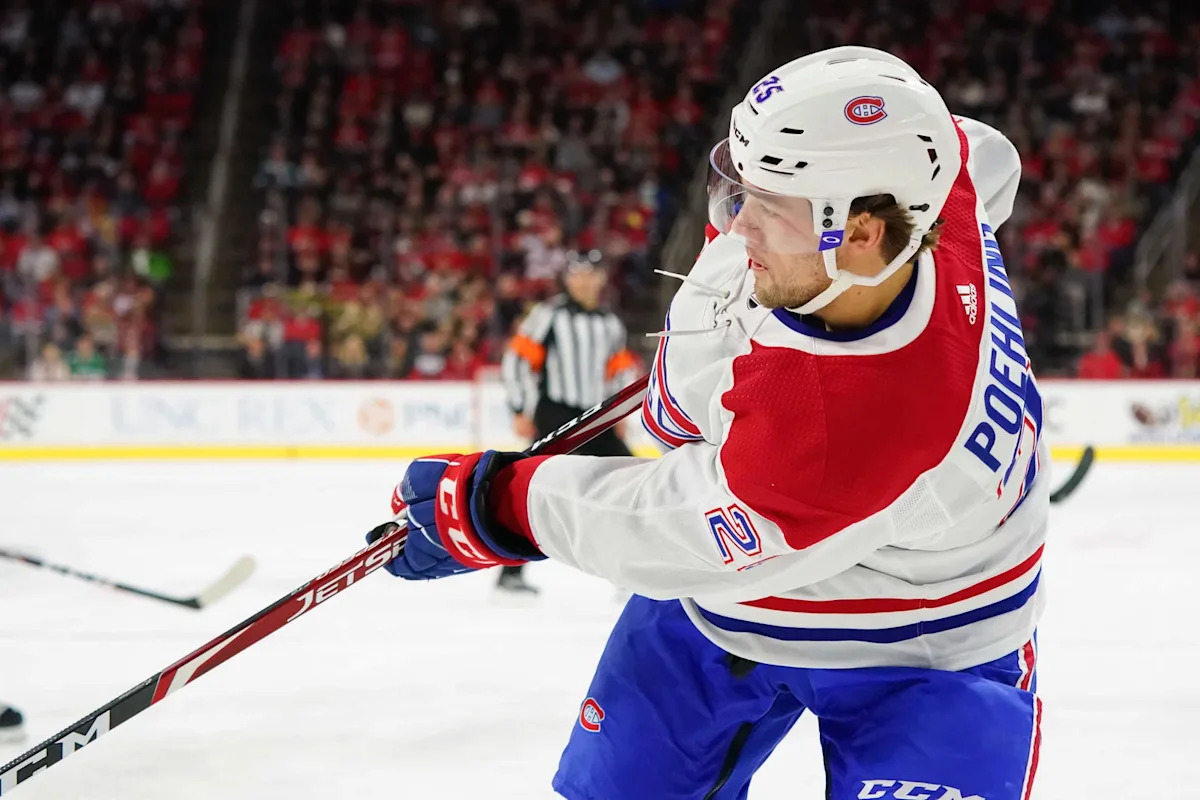
Ryan Poehling, the versatile defensive center for the Anaheim Ducks, has emerged as a critical asset in the NHL's most pivotal moments. His ability to deliver in high-pressure scenarios, particularly against elite teams like the Edmonton Oilers, showcases a blend of tactical intelligence and physical resilience.
Recent performances highlight Poehling's impact. In Game 2 of the Western Conference Finals against the Oilers, he scored twice—once while shorthanded and another into an empty net—providing the Ducks with crucial momentum. This performance not only secured a 6-4 victory but also underscored his adaptability in transition play and defensive responsibilities.
How Do Defending Centers Like Poehling Thrive in Pressure-Intensive Games?
Poehling's role as a defensive center is often misunderstood. Unlike traditional forwards, his value lies in his capacity to disrupt opposition attacks while contributing to offensive opportunities. His success in Game 2 against the Oilers demonstrates this duality, where he consistently balances defensive stability with explosive offensive moments.
- Shorthanded goals highlight his ability to capitalize on turnovers, a skill that has become increasingly vital in modern NHL strategy
- Empty-net scoring reveals his tactical awareness and quick decision-making in chaotic, high-speed situations
- Multi-game impact shows how a single player can shift team dynamics in critical moments of a series
Historically, defensive centers have been undervalued in scoring statistics, but Poehling challenges this narrative with his consistency in delivering game-changing plays. His performance in the 2026 playoffs exemplifies a new standard for defensive players who can influence outcomes beyond just preventing goals.
Analysts attribute Poehling's success to his understanding of spatial dynamics. By positioning himself to exploit gaps in the opposition's defense, he creates scoring opportunities that often go unnoticed in conventional metrics. This approach aligns with the evolving NHL strategy that prioritizes team cohesion over individual stats.
Looking ahead, Poehling's trajectory offers insights into the future of hockey. As the league shifts toward more dynamic, multi-faceted roles, players like him will likely become central to winning high-stakes series. His ability to thrive under pressure and deliver in critical moments reflects a broader trend toward value-driven, context-aware player evaluation.