

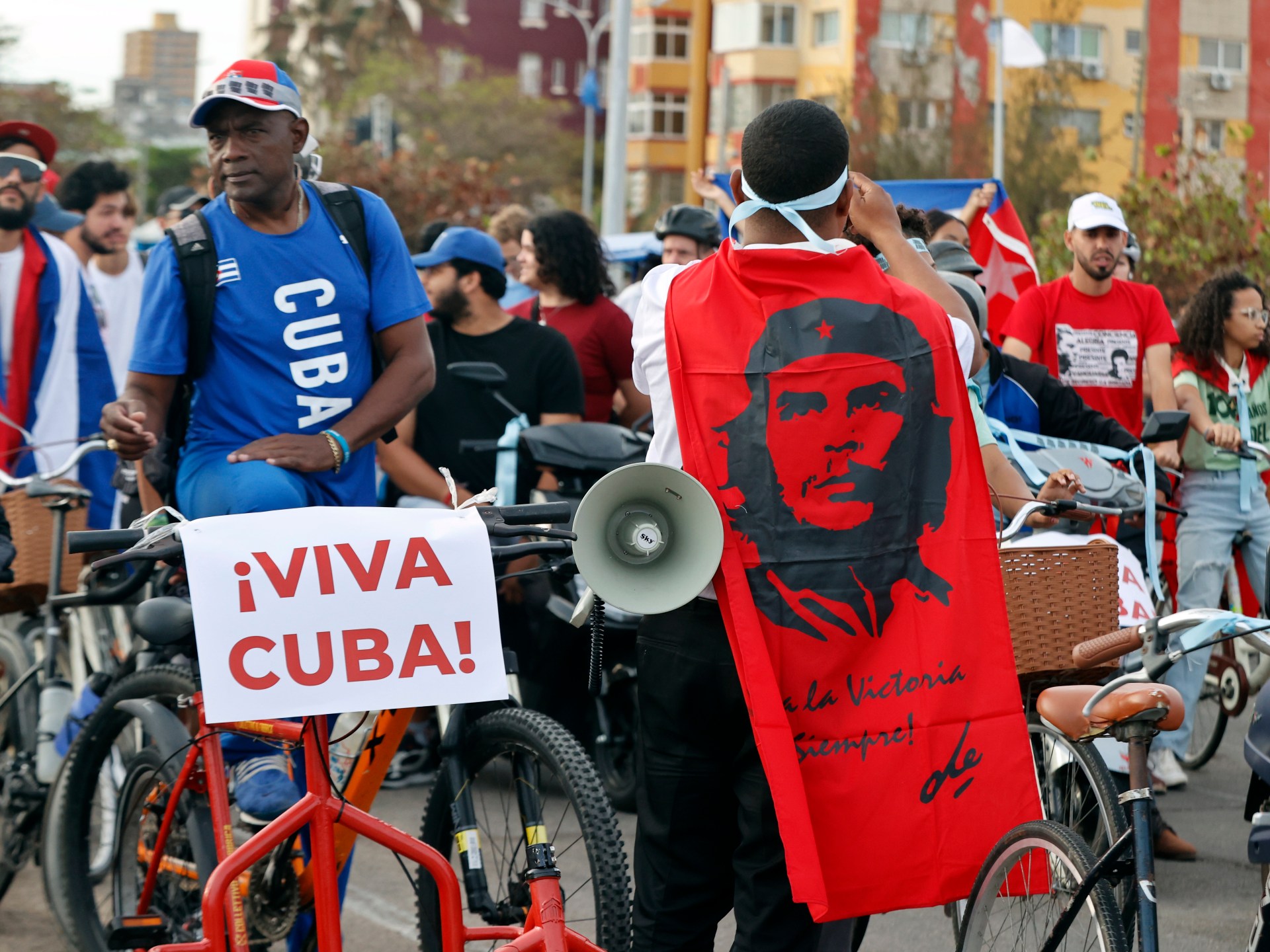
As the U.S. Senate grapples with escalating tensions over Cuban policy, a critical moment has emerged where the chamber's political dynamics are directly influencing presidential actions. With former President Donald Trump's repeated threats to deploy military force against Cuba, the Senate has become a battleground for ideological clashes between Republicans and Democrats.
Recent developments reveal a stark confrontation: Senate Republicans have successfully blocked a Democratic-led initiative to prevent Trump from initiating military action against Cuba. This procedural veto, formalized through a vote on Tuesday, highlights the deepening divide within the chamber regarding Cuba policy. The measure, designed to compel a formal war powers vote, was explicitly intended to curb potential aggression against Cuba's sovereign nation.
Can the Senate Stop Trump from Using Military Against Cuba?
Democrats' attempt to force a vote on a war powers measure was swiftly blocked by Republicans, who argued that the U.S. isn't currently engaged in hostilities with Cuba. This procedural move, which would have required a formal war powers vote, was framed by Democrats as a critical safeguard against potential military escalation.
Historically, the U.S. has maintained a complex relationship with Cuba. The 1962 Cuban Missile Crisis marked a pivotal moment in Cold War history when the U.S. and Soviet Union stood at the brink of nuclear conflict. Today's situation echoes past tensions, with the Senate now acting as a critical check on executive power in a context where national security and diplomatic relations are at stake.
- Procedural blocking of war powers votes has been a longstanding mechanism to prevent unilateral military actions
- Republicans' stance aligns with a broader conservative narrative that emphasizes national sovereignty and deterrence
- Cuba's status as a non-aligned nation with no formal military engagement with the U.S. since 1962
Analysts suggest this move reflects a strategic shift in how Congress addresses presidential overreach. The Senate's decision to block the war powers vote is not merely procedural—it is a deliberate move to maintain the balance of power between the executive and legislative branches.
Supporters of the block argue that it prevents unnecessary escalation in a region where diplomatic channels remain open. Critics, however, warn that this could lead to a dangerous precedent where executive decisions on military action are unchecked. As the U.S. continues to navigate its relationship with Cuba, this legislative maneuver underscores the challenges of maintaining a stable, non-military approach to a historically sensitive region.
The implications of this decision are profound. Should Trump pursue military action against Cuba, it could trigger a cascade of international consequences, including heightened tensions with key allies and a destabilization of the Caribbean region. The Senate's decision to block the war powers vote is a pivotal moment in the ongoing debate over presidential authority and congressional oversight.



