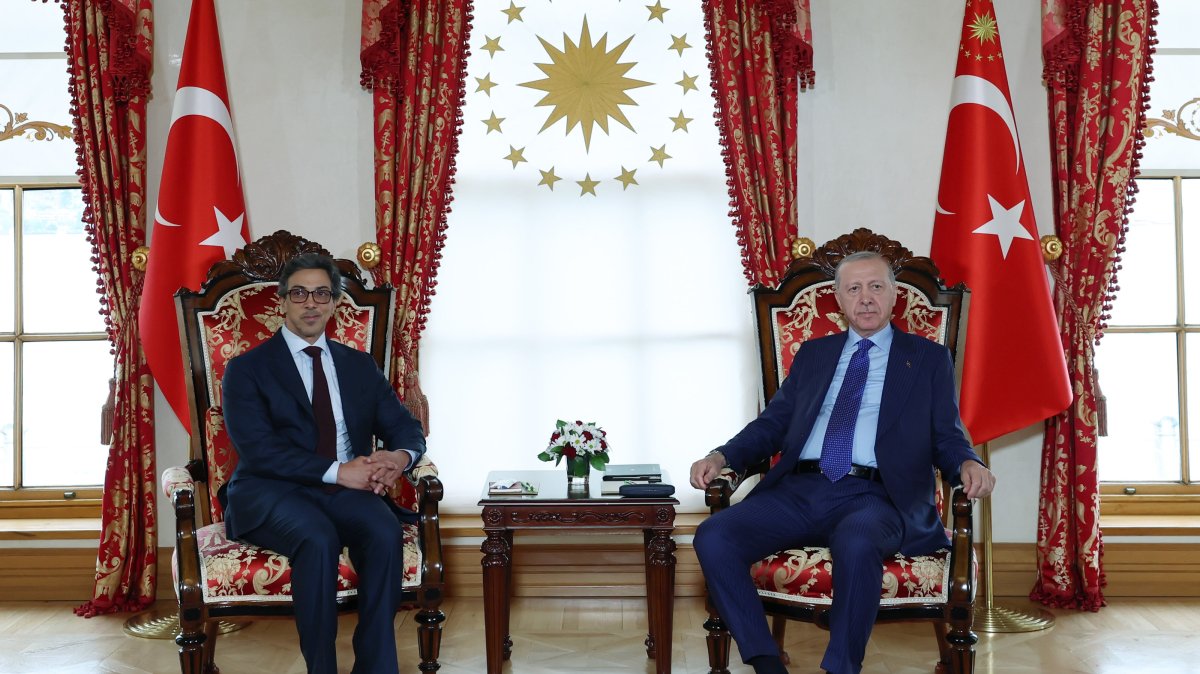
As Middle Eastern geopolitics continues to evolve, a critical diplomatic development has emerged: President Recep Tayyip Erdoğan of Turkey and Sheikh Mansour bin Zayed, Vice President of the United Arab Emirates (UAE), have engaged in high-stakes strategic discussions in Istanbul. This meeting, highlighted by Daily Sabah, marks a pivotal moment in the deepening ties between Ankara and Abu Dhabi, particularly amid escalating tensions in the region.
The talks occurred against a backdrop of complex regional dynamics, where Iran–U.S. tensions have intensified, and both nations are actively navigating a shifting Middle Eastern security landscape. During his visit to Istanbul, Sheikh Mansour focused on mutual interests in stabilizing the region, emphasizing cooperation on security challenges and economic collaboration. This direct engagement underscores the growing alignment between Turkey and the UAE, two key actors with divergent historical approaches to regional conflicts.
Can Turkey and the UAE overcome historical tensions to build a robust alliance?
Historically, Turkey’s position has been more nuanced, having previously supported Iran during the 2006 Lebanon War, while the UAE has consistently aligned with U.S. interests in the region. This contrast has shaped their evolving relationship. However, recent strategic shifts—such as Turkey’s pivot toward the Middle East and the UAE’s role as a regional economic hub—have created opportunities for collaboration. The meeting in Istanbul represents a deliberate move by both leaders to address shared concerns, including the destabilizing influence of Iran and the need for a more stable, predictable regional order.
One notable aspect of this collaboration is the focus on economic integration. The UAE’s experience in fostering cross-border trade and infrastructure projects has provided a blueprint for future joint initiatives. For instance, the UAE’s success in developing the Abu Dhabi International Financial Centre (ADIFC) has set a precedent for attracting foreign investment and facilitating regional economic growth. Turkey, with its vast land border with the Middle East, has the potential to leverage these models for mutual benefit.
- Security coordination: Both nations are addressing the threat of Iranian aggression and regional fragmentation through joint military exercises and intelligence sharing.
- Economic corridors: Initiatives like the Istanbul–Abu Dhabi corridor, which aims to connect key economic zones, could significantly boost trade and connectivity.
- Humanitarian outreach: Collaborative efforts in addressing refugee crises and promoting regional stability are gaining traction.
The strategic dialogue has also highlighted the importance of balancing U.S. and Russian influence in the region. With the U.S. and Russia vying for influence in the Middle East, both Turkey and the UAE are positioning themselves as neutral mediators. This shift reflects a broader trend where regional actors are increasingly taking initiative in shaping a more stable, predictable regional order.
Looking ahead, the success of this partnership will depend on their ability to maintain consistent communication and address emerging challenges. As the Middle East continues to face volatility, the UAE-Turkey partnership could serve as a model for other regional players seeking to stabilize the region through dialogue and cooperation.