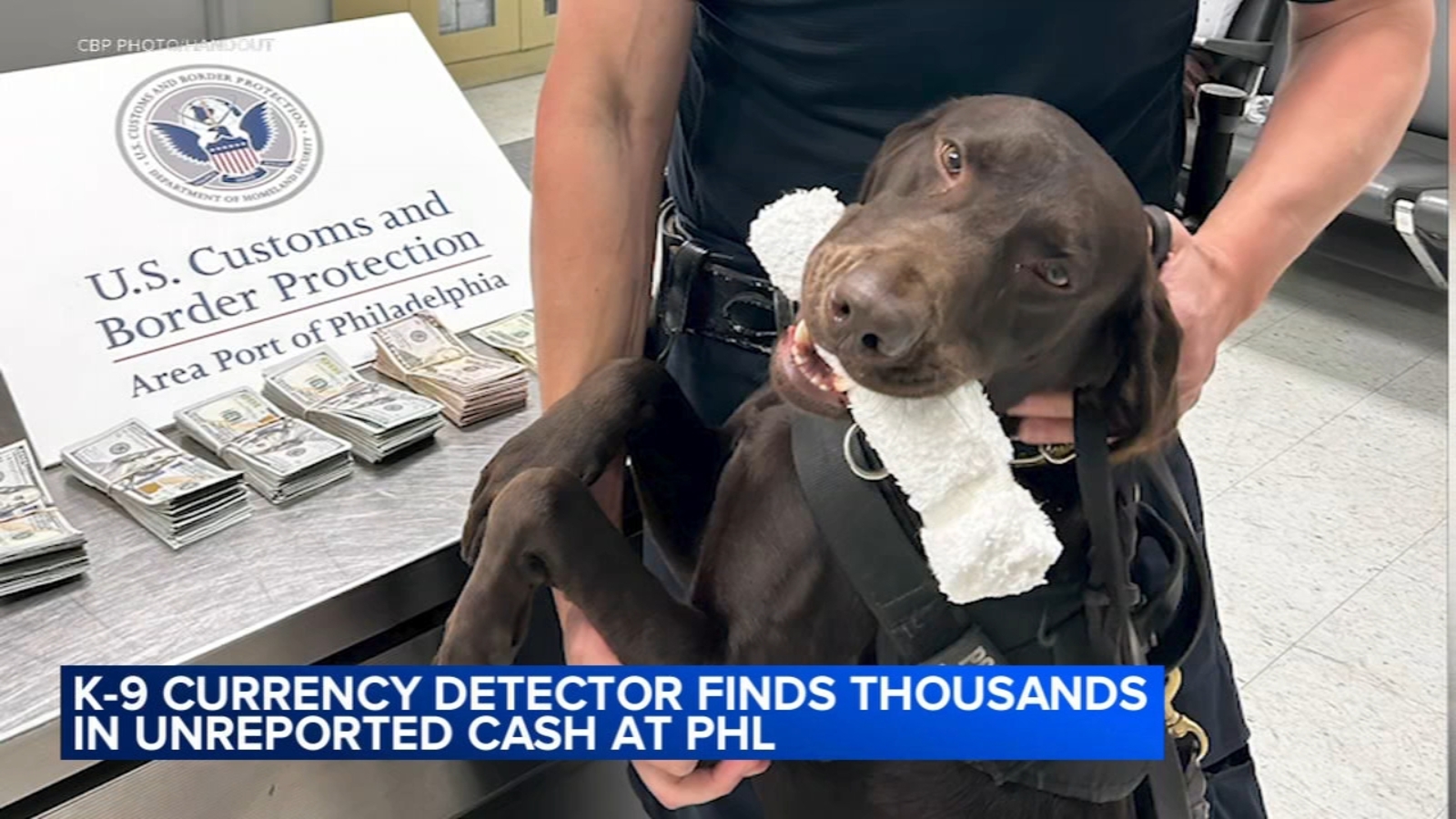
On May 8, 2026, U.S. Customs and Border Protection (CBP) confirmed a significant seizure of $44,000 in unreported cash discovered at Philadelphia International Airport through a K-9 currency detector. This incident highlights the critical role of canine units in modern border security operations and underscores the evolving challenges of cross-border financial crime.
The discovery occurred when a K-9 unit, specifically trained to detect bulk currency, firearms, and ammunition, alerted officers to a large amount of cash concealed in a traveler’s luggage bound for Mexico. The K-9, a 3-year-old male chocolate Labrador retriever named Nitro, has been instrumental in identifying illegal financial activities at high-risk entry points.
How Do K9 Units Work in Border Security?
K-9 units, particularly those trained in currency detection, are highly specialized dogs that can identify counterfeit money and large volumes of legal tender with remarkable precision. Unlike human officers, these canines rely on their acute sense of smell to locate hidden cash, which is often used in smuggling operations or illicit financial transactions.
- Training process: K9s undergo rigorous training to detect specific denominations of currency, including high-value bills like $100s and $500s.
- Operational efficiency: A single K-9 can cover large areas of an airport in minutes, identifying threats that would take human agents hours to spot.
- Real-world impact: In this case, the alert led to a $44,000 seizure, preventing potential financial crimes and enhancing border integrity.
The CBP has emphasized that this finding is part of a broader strategy to combat cash smuggling, which has become increasingly sophisticated as criminals use digital and physical channels to move large sums across borders.
Historically, cash smuggling has been a persistent issue for border agencies, with the U.S. government reporting over $1.2 billion in annual cash seizures since 2015. However, the use of K9 units has significantly improved detection rates, reducing the risk of financial crimes that could destabilize economies or fund illicit activities.
Experts note that the case in Philadelphia is emblematic of a growing trend in which individuals attempt to move large sums of cash across international boundaries without proper documentation. By targeting high-risk travelers, especially those heading to countries with lower financial transparency, agencies like CBP are adapting to the evolving landscape of cross-border crime.
The CBP’s proactive approach—using technology like K-9 units in conjunction with human oversight—has proven effective in identifying and intercepting financial crimes. This case demonstrates how specialized units can make a tangible difference in safeguarding national finances and preventing economic espionage.