

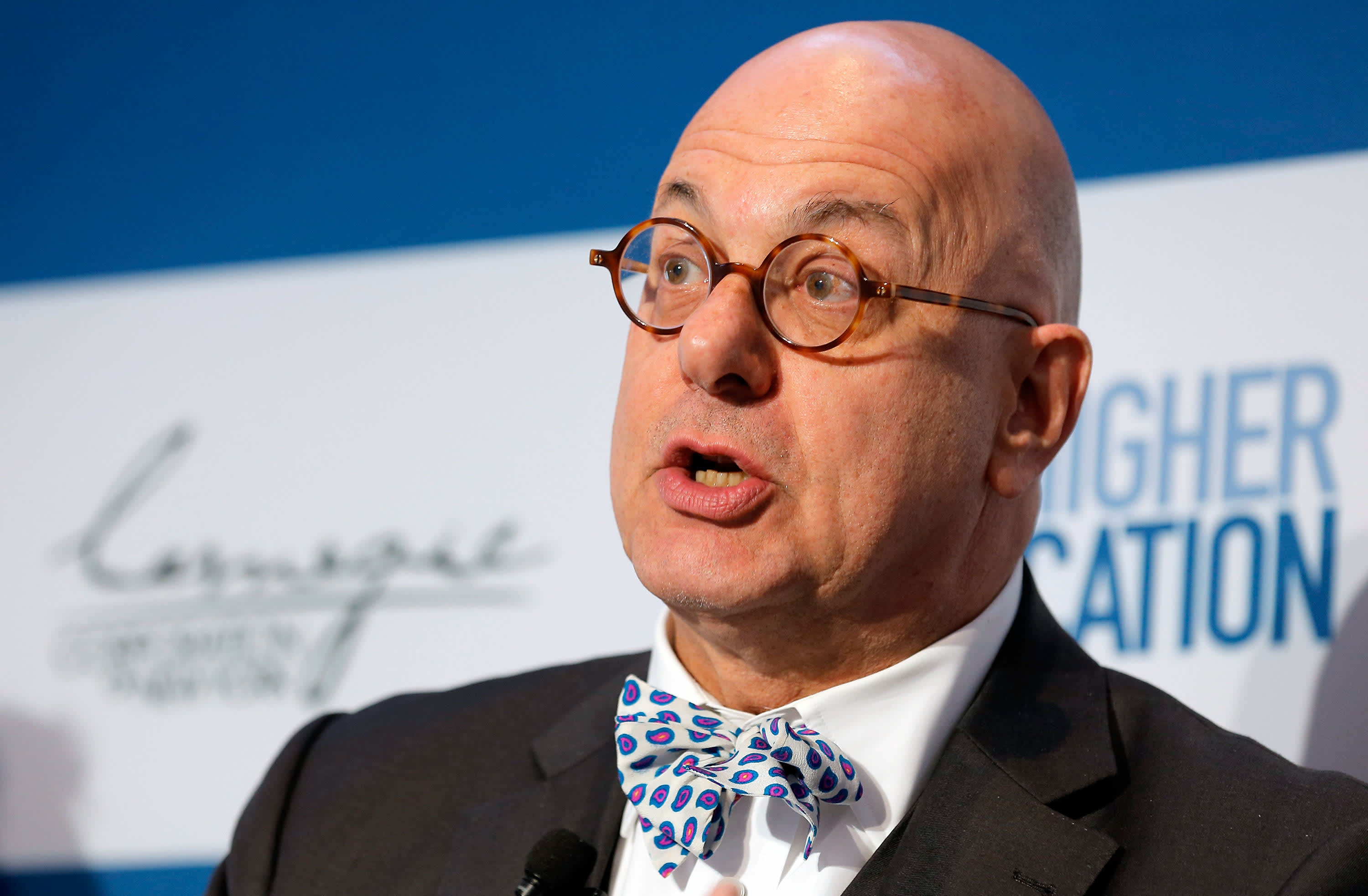
Bard College has confirmed that its president, Leon Botstein, will step down from his role following revelations linking him to Jeffrey Epstein. The decision comes as the college faces heightened scrutiny over its historical ties to the controversial financier. Botstein, who has led the institution for over five decades, announced his retirement at the end of June, marking a significant shift in the leadership of one of America's most renowned liberal arts colleges.
Leon Botstein's tenure at Bard College began in 1971, a period when the college was undergoing significant transformation under the guidance of its founders. His leadership has been pivotal in shaping the institution's academic rigor and commitment to interdisciplinary education. However, recent reports from reputable outlets, including The New York Times, have raised questions about his connections to Epstein, a figure whose influence extended far beyond financial matters into the realm of high-profile social and political networks.
How did Leon Botstein become linked to Epstein?
According to The New York Times, Botstein's relationship with Epstein has been under investigation since the early 2010s. While the details remain unclear, it is known that Epstein was a prominent financier with extensive ties to elite circles, including prominent academic and political figures. Botstein's involvement appears to have been more subtle than publicized, involving private meetings and discussions that have now been scrutinized in light of recent legal and financial inquiries.
- The connection has been tied to a series of meetings between Botstein and Epstein that occurred in the 2010s.
- Botstein's role in facilitating access to Epstein's network has been highlighted in internal documents.
- These ties have led to calls for transparency and accountability within the college's leadership.
The situation has sparked a debate about the ethics of academic leadership and the role of private networks in shaping educational institutions. Critics argue that such connections could compromise the integrity of academic environments, while supporters emphasize the importance of historical context and the complexity of individual relationships.
Bard College, founded in 1888, has long been a bastion of intellectual freedom and academic excellence. Its reputation for fostering critical thinking and interdisciplinary approaches has been a cornerstone of its identity. However, the recent revelations have raised questions about whether the college's values can be maintained in the face of such controversies.
As the college moves forward, it faces the challenge of addressing these issues while preserving its legacy. The retirement of Botstein, who has been a central figure in the institution's history, underscores the complexities of modern academic leadership and the need for ongoing transparency and ethical considerations.



