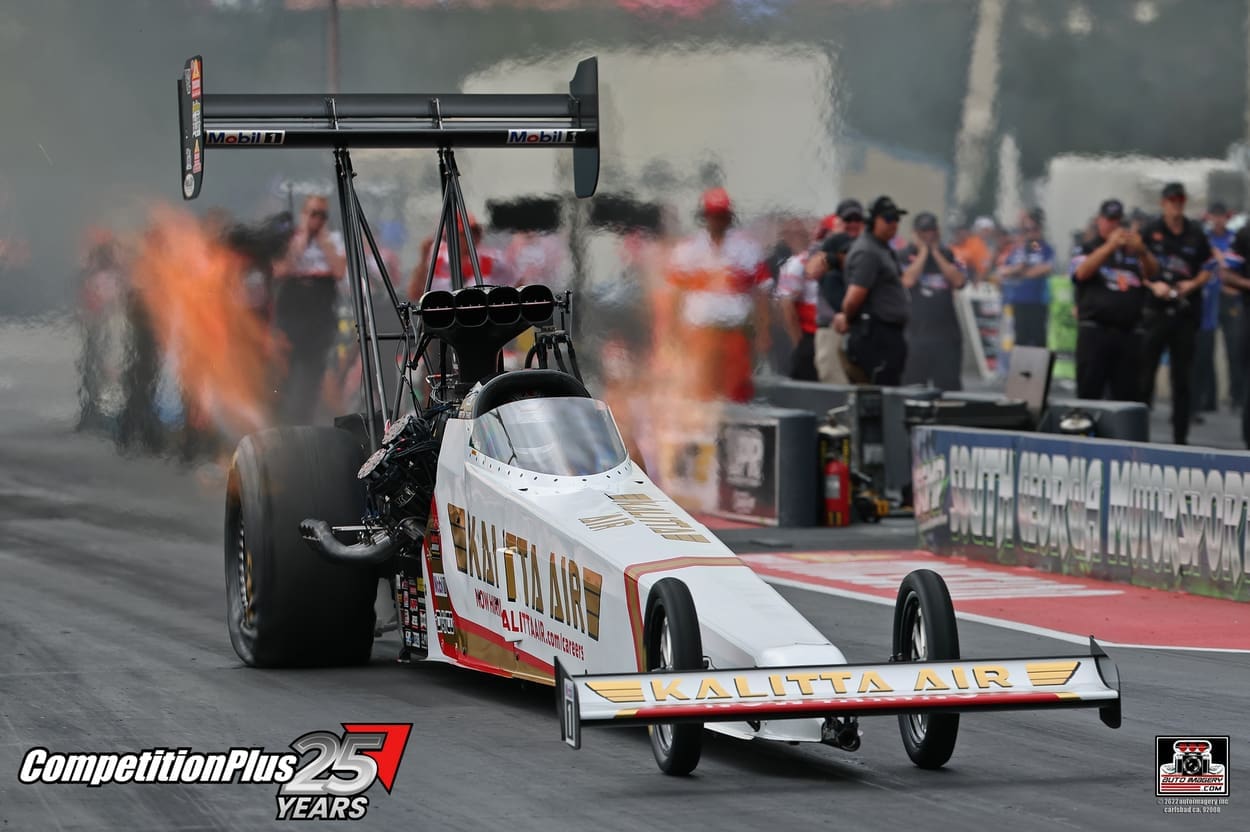
On May 1, 2026, at South Georgia Motorsports Park in Adel, Georgia, a historic moment unfolded in the world of drag racing. Shawn Langdon, driving a Top Fuel dragster, achieved an unprecedented speed of 345 miles per hour—a figure that shattered the previous NHRA record and redefined the boundaries of speed in American motorsports. This wasn't just a race; it was a landmark moment that captured the essence of human ingenuity and technological precision.
The NHRA Southern Nationals, held at South Georgia Motorsports Park, have long been a testing ground for innovation and speed. With this record-breaking run, Langdon didn't just set a new benchmark; he pushed the limits of what was thought possible in high-speed automotive engineering. The event, which was marked by a dramatic opening ceremony featuring fireworks, highlighted the symbiotic relationship between cutting-edge technology and human skill that defines modern drag racing.
How Did Langdon Achieve This?
Behind the scenes, the achievement required meticulous preparation and a deep understanding of aerodynamics, engine performance, and track conditions. Langdon's team worked for months to optimize his vehicle's design, focusing on reducing drag and increasing thrust. The result was a vehicle capable of sustaining speeds that previously seemed unattainable.
- Advanced aerodynamic shaping to minimize air resistance
- High-precision fuel injection systems for optimal combustion efficiency
- Real-time data analysis from onboard sensors to fine-tune performance
The use of these technologies underscores the evolution from simple drag races to highly engineered, data-driven competitions. Each component of the vehicle was meticulously calibrated to ensure maximum speed without compromising safety—a balance that has long been a hallmark of professional drag racing.
Interestingly, the race also highlighted the importance of environmental factors. The specific conditions at South Georgia Motorsports Park, including the flat, open track and favorable wind patterns, played a critical role in the success of this run. These elements, combined with the team's strategic planning, created a perfect storm for a record-breaking performance.
What This Means for Future Speed Records
The implications of Langdon's achievement extend far beyond a single race. As drag racing technology continues to evolve, this record sets a new standard for what is considered 'possible.' Future competitions will likely see further refinements in vehicle design, with a focus on sustainability and efficiency.
Moreover, this event underscores the importance of adaptability in the face of changing conditions. The ability to adjust to environmental factors, such as wind and temperature, will become increasingly critical as the sport continues to push the envelope of speed.
For the racing community, this moment represents a pivotal step in the evolution of drag racing. It serves as a reminder that innovation and precision are key to achieving extraordinary results.