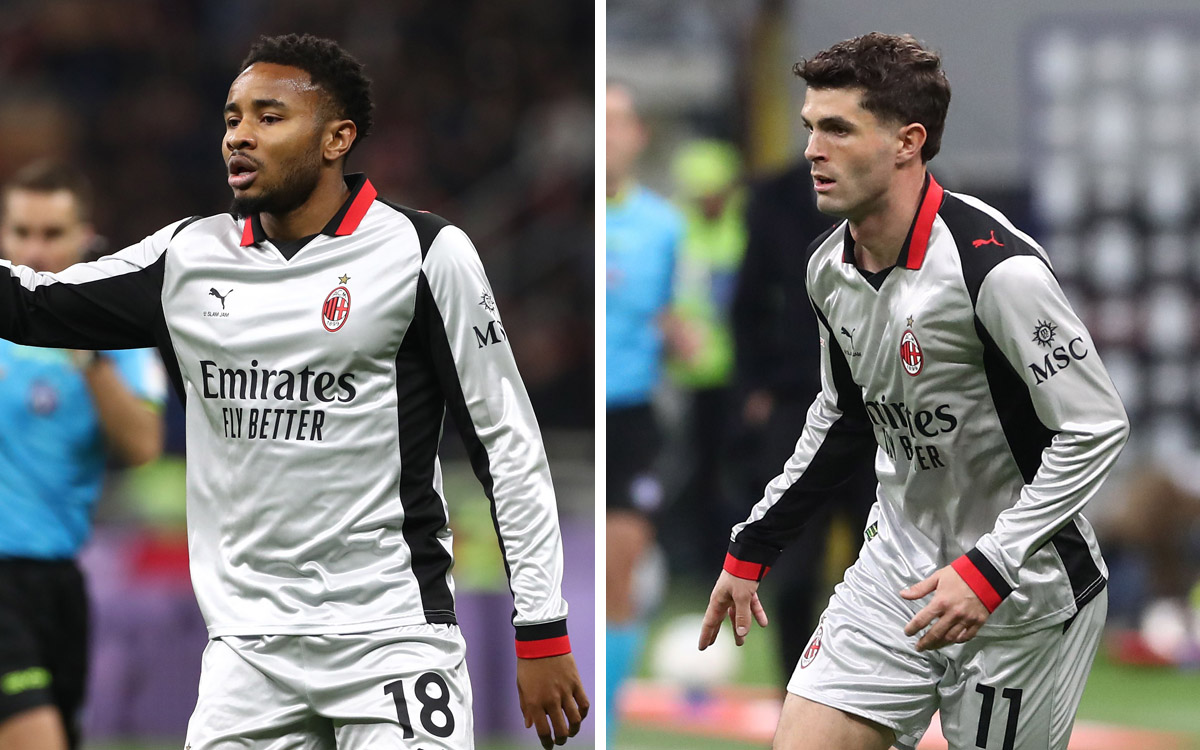
As the Italian Serie A season enters its decisive phase, the clash between Sassuolo and AC Milan has become a pivotal moment for both clubs. With Sassuolo securing a 2-0 victory over Milan, the match highlights the tactical evolution and strategic depth of modern football in the top flight. This result underscores a broader narrative of how clubs adapt to the shifting dynamics of the league, particularly in high-stakes fixtures.
For AC Milan, the implications of this loss are immediate and profound. Without Modric in the starting lineup, the team has struggled to find consistency in attack, a problem that has been exacerbated by their poor performance in the final third. This tactical misalignment has led to a significant drop in scoring efficiency, with Milan scoring just one goal in the last four matches. The absence of key players like Leão and Nkunku, who have been instrumental in driving Milan's attacking prowess, has further complicated their ability to compete at the highest level.
How does Sassuolo’s success reflect the tactical shift in Serie A?
Sassuolo’s victory is not just a one-off performance but a reflection of their strategic approach to the game. By focusing on counter-attacking and quick transitions, Sassuolo has consistently disrupted Milan’s traditional possession-based style of play. This tactical shift has allowed them to exploit the weaknesses in Milan’s midfield and defense, particularly their inability to convert high-pressing opportunities into concrete goals.
- Midfield control: Sassuolo’s ability to dictate the tempo of the game through precise passing and quick transitions has been a key factor in their success.
- Defensive solidity: The team’s disciplined defensive line has minimized errors, allowing them to maintain a strong defensive structure throughout the match.
- Goal-scoring efficiency: Despite limited opportunities, Sassuolo has shown an ability to capitalize on their opponents’ mistakes, resulting in a high conversion rate on their chances.
The match also highlights the importance of player selection and adaptability. Milan’s decision to start Leão and Nkunku, despite their recent form, signals a strategic attempt to boost their attacking output. However, this move has had mixed results, with the duo struggling to find their rhythm in the final third.
For the future, this match serves as a critical benchmark for both clubs. Sassuolo’s success demonstrates the value of a well-planned tactical approach, while Milan’s struggles highlight the need for immediate adjustments to their attacking strategy. The implications of this result extend beyond the immediate match, affecting the broader narrative of Serie A’s evolving tactical landscape.