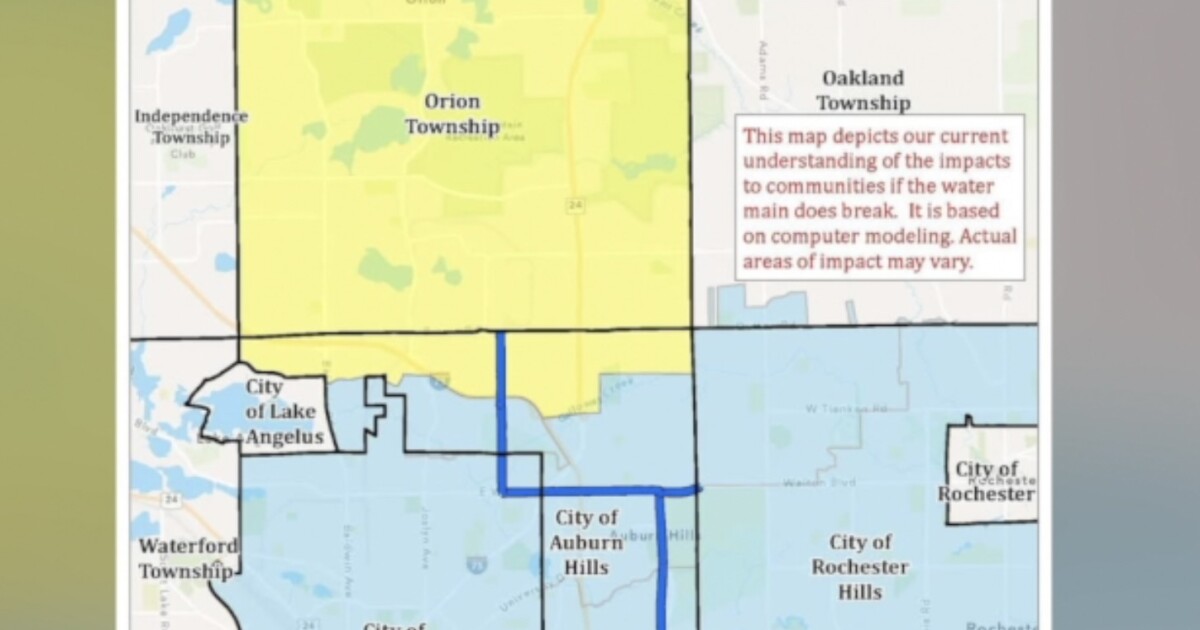
On May 10, 2026, a catastrophic 42-inch water main break in Auburn Hills, Michigan, triggered a state of emergency across multiple communities, including Orion Township and parts of Oakland County. This incident, discovered near River Woods Park, has left thousands of residents without access to essential water services. The scale of the damage is unprecedented, with emergency water use orders now in place for affected zones, signaling the severity of the disruption.
Could a single water main failure cripple an entire county?
The leak originated from a critical 42-inch transmission main, a type of infrastructure designed to carry high-volume water across long distances. Such mains are vital for maintaining consistent water supply to urban and suburban areas, but their failure can cascade into widespread outages. In this case, the break occurred during a period of heavy rainfall, which exacerbated the pressure on the aging pipeline system.
Emergency water use orders have been issued in several neighborhoods, with officials warning that some residents could face a two-week water outage. This is particularly concerning given the region's reliance on a single, aging water network that lacks redundancy.
Why is this incident so severe?
- Infrastructure vulnerability: Older water mains, often over 50 years old, are prone to corrosion and structural failure. The 42-inch main in question is part of a system that has not been fully modernized in decades.
- Geographic impact: The location near River Woods Park in Auburn Hills connects to multiple suburbs, including Orion Township, affecting over 15,000 households directly.
- Emergency response: The state of emergency declaration allows local authorities to deploy resources without waiting for standard approval processes, highlighting the urgency of the situation.
City officials have confirmed that the water main break has caused significant disruptions to the delivery of clean water to residential and commercial areas. The state of emergency declaration is a critical step to mobilize emergency funds and coordinate repairs, which may take weeks due to the complexity of the repair process.
Residents in affected zones are advised to conserve water, use emergency water use orders, and avoid unnecessary water consumption. The incident underscores the growing challenge of maintaining aging water infrastructure in rapidly developing regions.