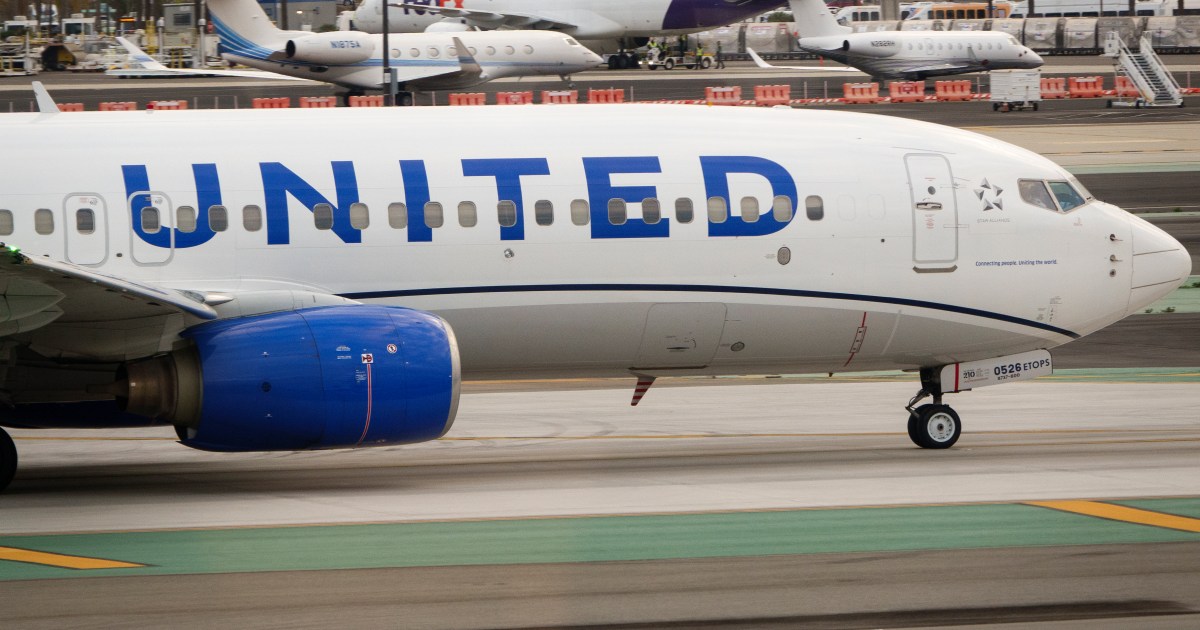
On May 30, 2026, United Airlines flight 2005 from Chicago to Minneapolis faced an unexpected disruption when authorities detained an unruly passenger, leading to a critical diversion to Dane County Regional Airport in Madison, Wisconsin. This incident highlights the growing complexity of in-flight safety protocols and the evolving challenges faced by airlines in managing passenger behavior during critical moments.
According to officials, the flight was initially heading toward its destination when a passenger exhibited disruptive behavior that escalated rapidly. The incident occurred during a routine segment of the journey, but its severity prompted immediate intervention by air traffic control and security personnel. The decision to divert the flight to a smaller airport in Wisconsin—a location far from the intended route—was made to ensure the passenger's safe containment and compliance with federal aviation regulations.
Why does an unruly passenger require such a drastic measure?
The term 'unruly passenger' is not a legal classification but a situational descriptor used by airlines and authorities when a passenger poses a threat to safety. In this case, the passenger’s actions were deemed to create an immediate risk to flight crew, other passengers, or the overall safety of the aircraft. Under U.S. federal law, airlines must prioritize passenger safety over operational efficiency, and this incident exemplifies that principle in action.
- Flight 2005 had already completed its initial segment of the journey, with no prior indications of trouble
- The passenger’s behavior was described as 'aggressive' but not violent, involving threats and refusal to comply with crew instructions
- Authorities confirmed the diversion was necessary to address the situation without further endangering others
Such incidents are not uncommon in aviation safety discussions, but their resolution often involves complex coordination between multiple entities. The flight’s redirection to a smaller airport in Wisconsin reflects a strategic choice to minimize risk while ensuring compliance with federal guidelines.
The incident has sparked discussions about the balance between passenger safety and operational logistics. Airlines must continuously adapt their protocols to address emerging threats without compromising the safety of all onboard. As air travel continues to grow, the need for clear, consistent procedures becomes increasingly critical.