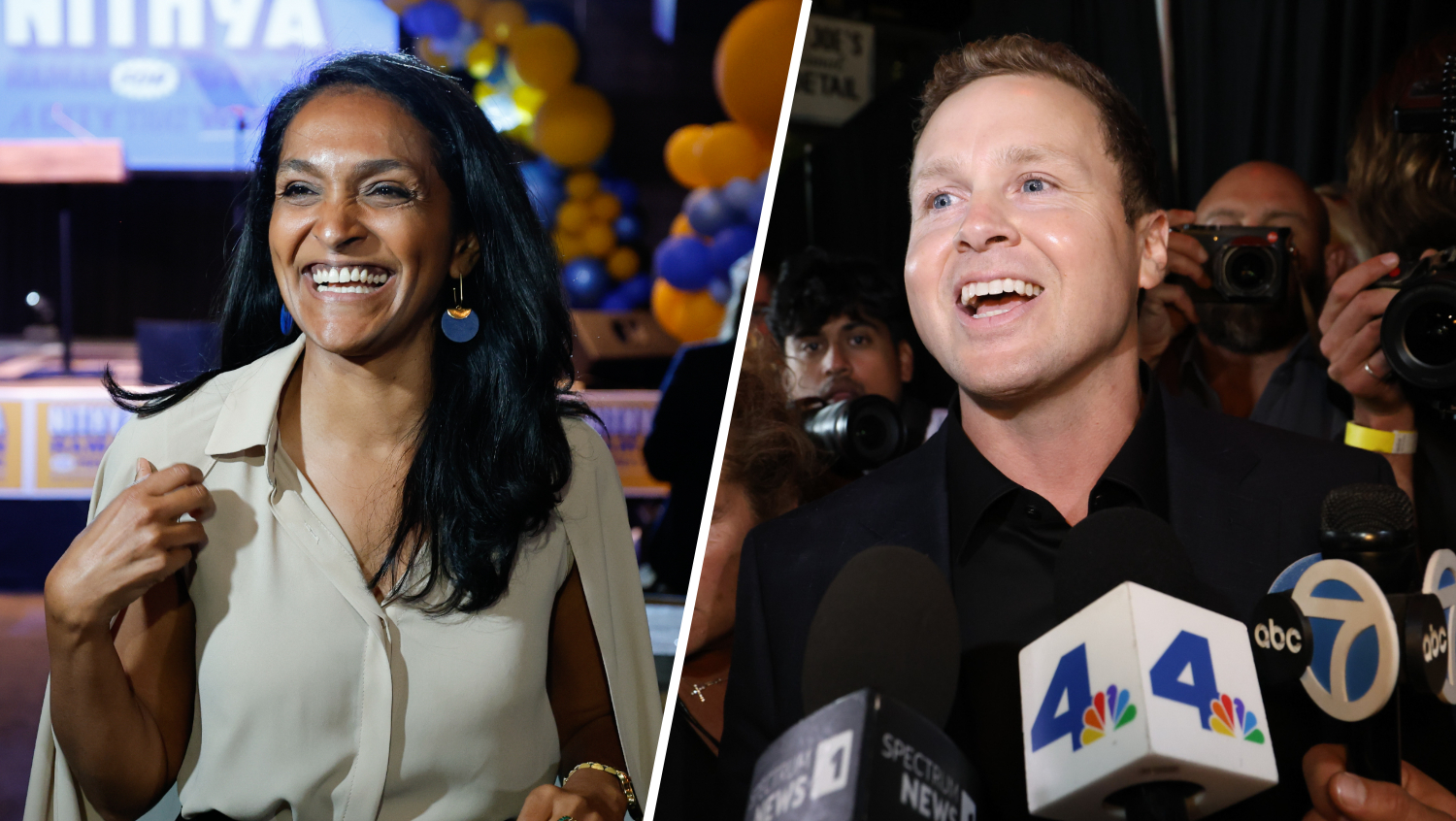
In the unfolding drama of Los Angeles' 2026 mayoral primary, the race between incumbent Karen Bass and her two most formidable challengers—Spencer Pratt and Nithya Raman—has become a flashpoint for political strategy, cultural identity, and the future of urban governance. As the final votes are tallied, the battle for the mayor’s office has shifted from a mere election to a defining moment for the city’s leadership trajectory.
Spencer Pratt, a former reality TV star turned Republican, has positioned himself as a 'pragmatic alternative' to Karen Bass, whose tenure has been marked by criticism over fiscal management and policy stagnation. Pratt’s campaign leverages his celebrity status to attract young voters and urban professionals, emphasizing economic revitalization and infrastructure investment. His strategy, however, has faced scrutiny for overreliance on short-term tactical wins rather than long-term policy frameworks.
Nithya Raman, a city council member and advocate for marginalized communities, has emerged as a counterbalance to Pratt’s appeal. Her platform focuses on social equity, affordable housing, and climate resilience, targeting a coalition of progressive activists, young professionals, and minority voters. Raman’s campaign has been praised for its data-driven approach to urban policy, reflecting the growing demand for localized, community-centric solutions in a city with over 5.8 million registered voters.
Who Will Win the Primary? The Data Tells a Different Story
Early results from Los Angeles County’s primary show a tightly contested race. The county’s unique electoral landscape—where vote counts are influenced by district-level variations—has created a dynamic where no single candidate can predict the outcome with certainty. Analysts note that the final tally could hinge on the final 1% of ballots remaining to be counted.
- Spencer Pratt’s strength lies in his ability to mobilize a diverse base, including young voters and suburbanites who feel alienated by Bass’s policies.
- Nithya Raman’s edge is her focus on actionable, community-specific policies that align with the needs of marginalized populations.
- Key uncertainty remains in the final 1% of ballots, which could determine whether the race shifts toward Pratt or Raman.
The primary’s outcome will set the stage for the November 3 runoff. If Pratt advances, he faces a challenge to prove his policy vision beyond the novelty of his celebrity status. If Raman wins, she must navigate the complexities of a city with deep-rooted socioeconomic divides.
The race has also highlighted the evolving role of social media in modern elections. Platforms like TikTok and Instagram have become critical battlegrounds for voter mobilization, with both campaigns deploying targeted ads and influencer partnerships. This shift underscores the growing intersection of entertainment and governance in urban politics.
As the primary nears its conclusion, the implications for Los Angeles’ future governance could not be clearer. The city’s leaders must confront the realities of rapid urbanization, climate threats, and economic inequality—a challenge that demands innovative, inclusive, and adaptable solutions.